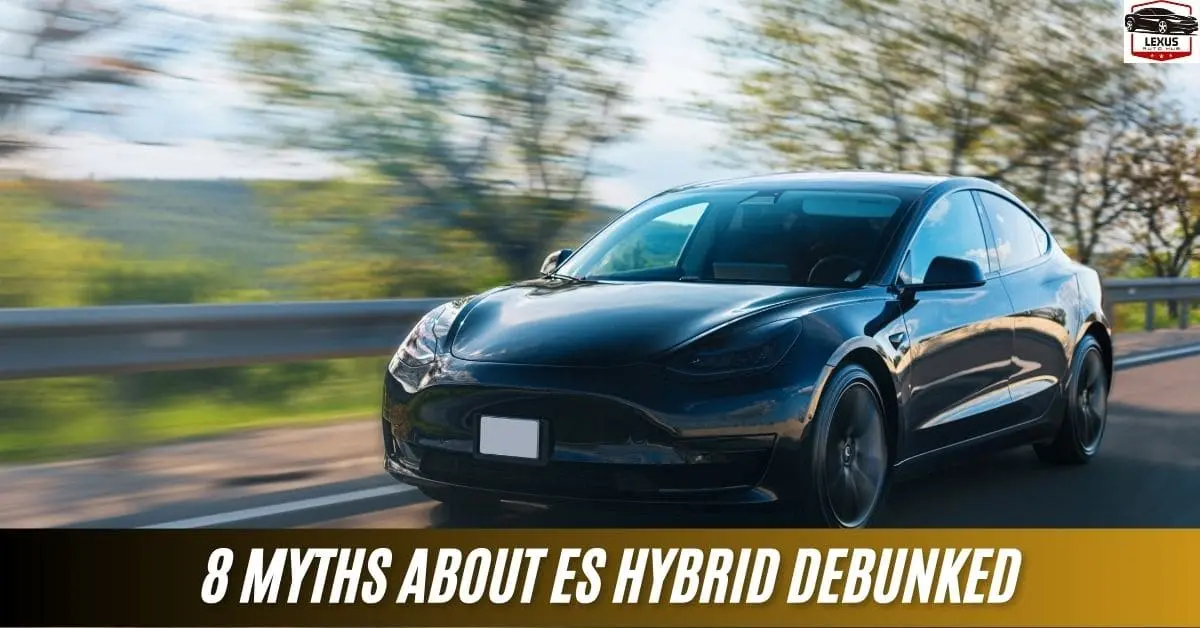
8 Myths About ES Hybrid Debunked
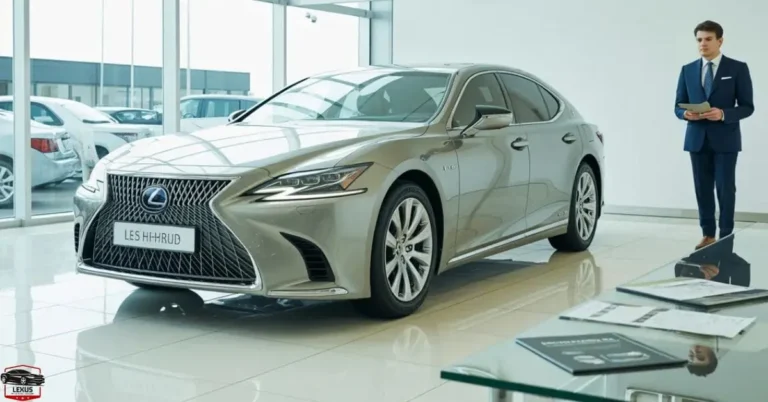
The Lexus ES Hybrid represents a thoughtful blend of luxury and efficiency in today’s automotive landscape. For drivers who want the comfort and refinement of a premium sedan without sacrificing fuel economy, this car offers a compelling solution.
Unlike traditional luxury vehicles that guzzle gas, the ES Hybrid uses a dual-powertrain system that seamlessly switches between gasoline and electric power, delivering impressive mileage without compromising the smooth, quiet ride Lexus is known for. Whether you’re commuting through city traffic or cruising on the highway,
The ES Hybrid adapts to your driving style while keeping fuel costs down. It’s designed for people who appreciate both environmental responsibility and the finer things in life—proving you don’t have to choose between sustainability and sophistication.
Also Read: How to Maintain Your Lexus ES500 for Longevity
Short Answer About ES Hybrid
The Lexus ES Hybrid is a luxury midsize sedan that combines a gas engine with electric motors for better fuel economy—typically getting around 40+ MPG. It offers a smooth, quiet ride with premium features while being more efficient than traditional luxury cars. Popular choice for those wanting luxury without high fuel costs.
1.Understanding Electric Vehicle Range and Long-Distance Travel
One of the biggest concerns people have about electric vehicles is their range capability for long-distance driving. Modern EV technology has made significant progress, with many electric vehicles now offering impressive range on a single charge.
The expansion of charging infrastructure has further eased these worries, as rapid charging stations are becoming more accessible along major routes. Drivers can now plan their trips with confidence, knowing that charging stations are available when needed. The combination of improved EV range and growing charging infrastructure makes long-distance driving in electric vehicles more practical than ever before.
EV batteries have also become more efficient, allowing for extended travel without frequent stops. This advancement in green transportation shows how far the industry has come in addressing early limitations of electric cars.
Also Read: How to Maintain Your 2020 Lexus IS for Peak Performance
2.Hybrid Vehicles and Their Environmental Impact
Hybrid vehicles play an important role in reducing vehicle emissions and promoting sustainable transportation. These eco-friendly cars combine an internal combustion engine with an electric motor to achieve better fuel efficiency compared to traditional gasoline-powered cars. The hybrid technology enables regenerative braking, which captures energy that would otherwise be lost and converts it into electricity.
This process contributes to emissions reduction and makes hybrid vehicles a practical step toward clean energy vehicles. While concerns exist about battery disposal and battery recycling, ongoing research is developing solutions to minimize the environmental impact of EV batteries. Hybrid vehicles serve as a bridge in the transition to zero emissions transportation, offering an alternative fuel vehicle option that reduces carbon footprint.
As plug-in hybrids and fully electric vehicles continue to evolve, they represent important progress in renewable energy transportation. Despite some electric car myths suggesting otherwise, these vehicles demonstrate measurable benefits for sustainable transportation and contribute meaningfully to green transportation goals.
Also Read: 7 Tips for Achieving IS 500 on Your Test
3.The True Cost of Electric Vehicle Ownership

Many people believe that electric vehicle cost is prohibitively high, but this is one of the most persistent electric car myths. While the upfront cost of purchasing an EV may seem steep compared to conventional gas engines, cost-effective ownership becomes clear when examining the total cost of ownership over time. Government incentives and tax credits are available in many regions to encourage electric vehicle adoption, significantly reducing the initial purchase price.
These financial incentives help bridge the gap between EV affordability and traditional vehicles. Beyond the purchase price, charging costs present another area of savings. Electricity costs for powering an electric vehicle are substantially lower than gasoline costs, leading to impressive long-term savings for daily drivers. Additionally, EV maintenance requirements are minimal compared to vehicles with internal combustion engines.
Electric vehicles have fewer moving parts, which means fewer components that can wear out or break down. This translates to reduced maintenance costs and fewer mechanic visits over the vehicle’s lifetime. When considering all these factors together, EV ownership costs often prove more economical than conventional alternatives despite higher initial investment.
Also Read: How to Maintain Your Lexus IS for Optimal Performance
4.Battery Technology and Longevity in Modern Electric Vehicles
Concerns about EV batteries and their lifespan represent another common misconception among potential buyers. The reality of battery degradation has improved dramatically with modern battery technology advances. Today’s batteries are engineered for exceptional battery durability and can handle thousands of charging cycles without significant loss in battery performance.
Battery longevity has become a strong point for electric vehicles rather than a weakness. Most manufacturers stand behind their products with comprehensive battery warranties that guarantee battery performance for extended periods, often eight years or more. These warranties provide assurance that battery replacement costs won’t become an unexpected financial burden during normal ownership.
As electric vehicle adoption continues to grow, battery technology has evolved rapidly, with improvements in both battery lifespan and production efficiency. The decreasing battery replacement costs reflect economies of scale and technological innovation in the industry. What once seemed like a major expense has become increasingly manageable and affordable, making the long-term proposition of electric vehicle ownership even more attractive for consumers seeking reliable and economical transportation solutions.
Also Read: How to Customize Your 2020 Lexus LS Experience
5.Electric Vehicle Performance and Power Capabilities
One of the most common electric vehicle myths is that they lack the power output and speed needed for an exciting drive. This misconception couldn’t be further from reality when examining actual electric vehicle performance. Hybrid vehicles strike a balance between eco-friendliness and capability, offering sufficient acceleration for everyday driving without compromising on efficiency.
However, high-performance vehicles in the electric category have truly changed the conversation about EV speed. These models can compete with and often exceed traditional sports cars in terms of raw performance. The secret lies in how electric motors function. Unlike conventional engines, they provide instant torque the moment you press the accelerator.
This torque delivery creates a dynamic driving experience that feels immediate and responsive. The acceleration from a standstill is particularly impressive, giving drivers a thrilling sensation that rivals any performance vehicle on the market. Electric car capabilities continue to expand as technology advances, proving that choosing an electric vehicle doesn’t mean sacrificing the driving experience. Whether for daily commutes or spirited weekend drives, modern electric vehicles offer performance optimization that meets diverse driver needs.
Also Read: How to Maintain Your Lexus LS for Optimal Performance 2026
6.Cold Weather Performance and Climate Adaptability
Another persistent concern involves cold weather performance and whether electric vehicles can handle frigid weather conditions effectively. While it’s true that climate conditions can influence any vehicle’s efficiency, advancements in battery technology have addressed many challenges associated with cold climates. Modern electric vehicles incorporate sophisticated battery management systems designed specifically for temperature regulation.
These systems monitor and adjust battery conditions to maintain optimal performance regardless of external weather impact. Thermal management has become a key feature in newer models, ensuring batteries operate within ideal temperature ranges. Many electric vehicles now include preheating features that allow drivers to prepare their cars before departure. These systems enable both cabin warming and battery warming while the vehicle is still plugged in, so you start your journey with maximum efficiency and comfort.
The preheating features ensure that energy isn’t drained from the battery to heat the interior or bring components up to operating temperature during your drive. Performance optimization in cold conditions has improved significantly, making electric vehicles viable transportation options even in areas that experience harsh winters. These technological improvements demonstrate that electric car capabilities extend across all climate conditions, dispelling another common myth about electric vehicle limitations.
Also Read: How to Maintain Your 2019 Lexus ES for Longevity
7.Safety Standards and Protection in Electric and Hybrid Vehicles

Some people question whether EV safety measures up to traditional gas-powered cars, but this concern lacks foundation in actual testing and design. Both hybrid vehicle safety and electric vehicle protection have been prioritized by manufacturers from the ground up. These vehicles are constructed on sturdy platforms with reinforced frames specifically engineered to protect occupants during impact.
The structural integrity ensures strong collision safety performance that meets or exceeds industry vehicle safety standards. Beyond the physical construction, modern electric and hybrid models incorporate numerous safety features that enhance passenger safety in various driving situations. Advanced safety features have become standard equipment rather than optional upgrades. Most models now include advanced driver-assistance systems that actively work to prevent accidents before they occur. These ADAS technologies encompass collision avoidance systems that can detect potential impacts and take corrective action.
Blind-spot monitoring helps drivers stay aware of vehicles in adjacent lanes that might not be visible in mirrors. Adaptive cruise control maintains safe following distances automatically, reducing driver fatigue on longer journeys. When examining safety ratings from independent testing organizations, electric and hybrid vehicles consistently perform well. Crash test results demonstrate that these vehicles provide excellent protection for occupants, often scoring among the highest in their respective categories and frequently surpassing traditional vehicles in overall safety performance.
8.Charging Convenience and Accessibility for Electric Vehicle Owners

The perception that EV charging is inconvenient doesn’t reflect the current reality of charging accessibility available to electric vehicle owners. Home charging has become the primary method for most drivers, offering unmatched charging convenience. Many people simply plug their vehicle into a standard household outlet for overnight charging, waking up to a fully charged battery each morning. For those wanting faster charging speeds at home, a dedicated home charging station can be installed, providing even quicker replenishment times.
This home charging solution eliminates the need for regular trips to fuel stations, actually saving time compared to traditional refueling routines. Beyond residential options, workplace charging has expanded significantly in recent years. Workplace charging stations allow employees to charge their vehicles during work hours, adding range without any extra effort or time commitment. The public charging infrastructure continues growing rapidly to support drivers when they’re away from home or work. Charging stations now appear in shopping centers, allowing drivers to add charge while running errands. Parking lots at restaurants, entertainment venues, and other public locations increasingly feature charging options.
This expansion of charging accessibility means drivers can find convenient charging opportunities throughout their daily routines. Additionally, fast-charging technology has revolutionized longer trips by dramatically reducing charging times.
Quick charging stations along highways can add significant range in just minutes rather than hours. These technological improvements in charging times mean that even road trips have become practical for electric vehicle owners, with brief charging stops comparable to traditional rest breaks during extended travel.
Final Thought:
The ES Hybrid stands as a practical choice for those seeking luxury without compromise. It demonstrates that you don’t have to choose between comfort and efficiency, offering a refined driving experience while delivering excellent fuel economy.
For drivers concerned about rising fuel costs but unwilling to sacrifice the premium feel of a luxury sedan, the ES Hybrid provides a sensible middle ground. The seamless integration of its gasoline engine and electric motor means you get the benefits of hybrid technology without any learning curve or dramatic change in how you drive.
As the automotive industry continues evolving toward electrification, the ES Hybrid represents a smart transition vehicle that lets you enjoy modern efficiency while maintaining the traditional luxury sedan experience.
Whether you’re commuting daily or taking longer trips, it adapts to your needs while keeping your fuel expenses manageable. For many buyers, the ES Hybrid offers the perfect balance of sophistication, reliability, and economy in today’s market.
FAQs
Is the Lexus ES a hybrid?
The modern explorer will appreciate the Lexus UX Hybrid, a versatile hybrid SUV built for city driving performance, nimble handling, and urban mobility, offered with F SPORT trims in a sporty hybrid design as a luxury compact SUV and agile city crossover
Can you still drive a Lexus Hybrid without the battery?
In Toyota hybrid system, Honda hybrid vehicles, Ford hybrid cars, and Lexus hybrid technology, hybrid battery failure or a dead hybrid battery causes gas engine dependency issues, leaving the hybrid drivetrain unable to start due to hybrid system operation.
What is the best year of Lexus ES Hybrid?
The 2013–2018 Lexus ES 300h is known for Lexus ES 300h reliability, earning its place as the most reliable Lexus ES with strong hybrid efficiency, minimal repair issues, a reliable hybrid sedan image, and proven Lexus hybrid reliability.
Is Lexus ES300h expensive to maintain?
The annual maintenance cost of a Lexus ES300h is $524. Repair and maintenance costs vary depending on age, mileage, location and shop.
What is the best year of Lexus ES Hybrid?
hybrid battery replacement, hybrid battery packs, certified hybrid technicians, high-voltage battery service, professional hybrid repair.

I’m Fiza Ansari, a Lexus specialist with 2+ years of experience helping drivers find their perfect luxury vehicle. From the sporty RC F to the elegant ES sedan and family-friendly RX—I know each model thoroughly. My expertise covers performance features, ownership costs, leasing options, and certified pre-owned benefits. Whether you’re a first-time luxury buyer or upgrading to an F Sport model, I provide honest guidance to help you make the right choice for your lifestyle and budget.