
How to Choose the Right Lexus PHEV Model for You
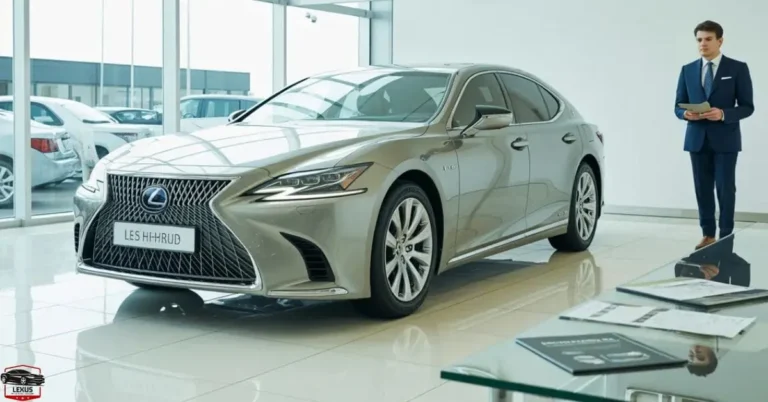
Selecting the perfect Lexus PHEV Model plug-in hybrid requires understanding your lifestyle, driving patterns, and family needs. The PHEV lineup—featuring the NX 450h+, RX 500h+, and TX 550h+—offers distinct advantages for different buyers, from the urban professional to the suburban family seeking a three-row SUV.
Your decision checklist should begin with honest assessment of your daily commute and round-trip mileage. Are you covering 30 miles daily or 80? Do you need third-row seating for growing families, or does a compact SUV suit your lifestyle? Understanding your charging habit potential—whether you can install a Level 2 charger at home—significantly impacts the ownership experience.
The electric range capabilities, cargo space requirements, and towing capacity needs vary dramatically between models. By evaluating your usage pattern, passenger capacity demands, and budget considerations including federal incentive programs, you’ll identify which luxury hybrid SUV delivers the optimal balance of fuel efficiency, capability, and refinement for your specific situation.
Also Read: How to Maximize Lexus TX Hybrid MPG Efficiency
Short Answer About Lexus PHEV Model
A Lexus PHEV (plug-in hybrid electric vehicle) combines a gasoline engine with an electric motor and rechargeable battery for electric-only driving. The current lineup includes the NX 450h+ compact SUV, RX 500h+ luxury hybrid SUV, and TX 550h+ three-row SUV.
These plug-in hybrid SUV models offer 30-40 miles of EV range with zero-emission capability, plus unlimited range in hybrid mode. Owners charge using a Level 2 charger or standard outlet via home charging, enabling most daily commute trips on electricity alone.
With federal incentive programs and exceptional fuel efficiency, Lexus PHEV models bridge traditional luxury SUVs and full electrification.
Understanding Lexus Plug-in Hybrid Technology
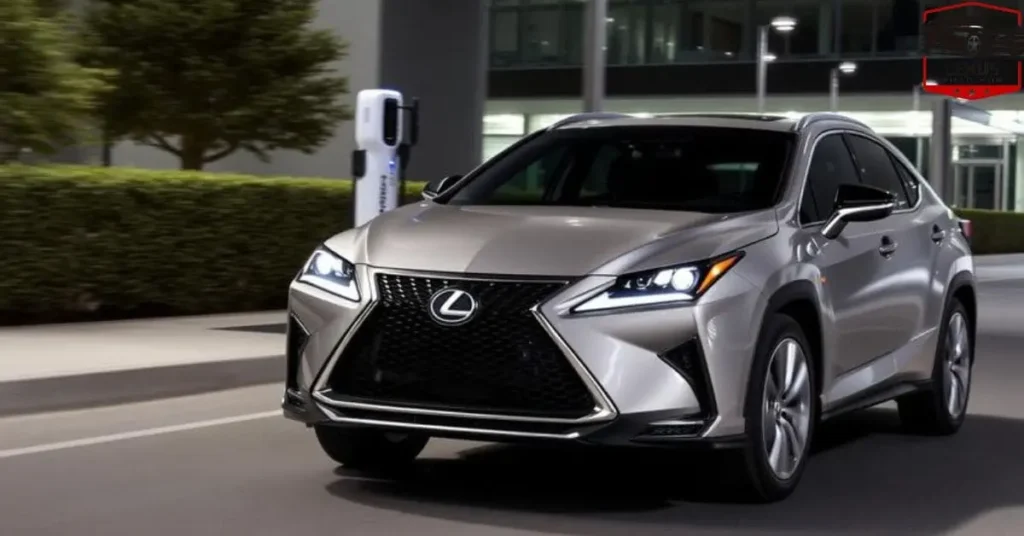
The Lexus plug-in hybrid lineup represents a sophisticated bridge between traditional gasoline-powered luxury SUVs and the full electric vehicle transition.
Unlike a standard hybrid or mild hybrid system, the PHEV architecture combines a powerful gasoline engine with an electric motor and a substantial battery size that enables genuine electric-only driving for your daily commute.
When you see the distinctive h+ badge on models like the NX 450h+, RX 500h+, and TX 550h+, you’re looking at vehicles engineered to deliver zero-emission capability without the range anxiety that concerns many buyers considering full electrification.
These aren’t self-charging hybrid models that simply capture energy during braking—they’re true plug-in hybrid SUVs designed for overnight charging at home and extended EV range.
Also Read: How to Improve Your Lexus ES MPG Efficiency 2026
The Lexus PHEV Lineup: NX 450h+, RX 500h+, and TX 550h+
NX 450h+: The Compact SUV Pioneer
The NX 450h+ serves as Lexus’s entry point into the plug-in hybrid SUV segment, targeting the urban professional who values fuel efficiency without sacrificing the luxury SUV experience.
This compact SUV delivers impressive electric range—typically between 36-40 miles in real-world conditions when fully charged—making it ideal for those whose round-trip mileage to work falls within the EV mode capability.
With its Level 2 charger compatibility, the NX 450h+ can fully replenish its battery overnight using a standard 240V charger installed in your garage. The charging port is conveniently located, and the high-voltage warranty provides peace of mind for the battery system.
Owner reviews consistently praise the quiet operation and electric torque delivery, particularly during electric-only driving around town.
RX 500h+: The Luxury Hybrid SUV Standard-Bearer
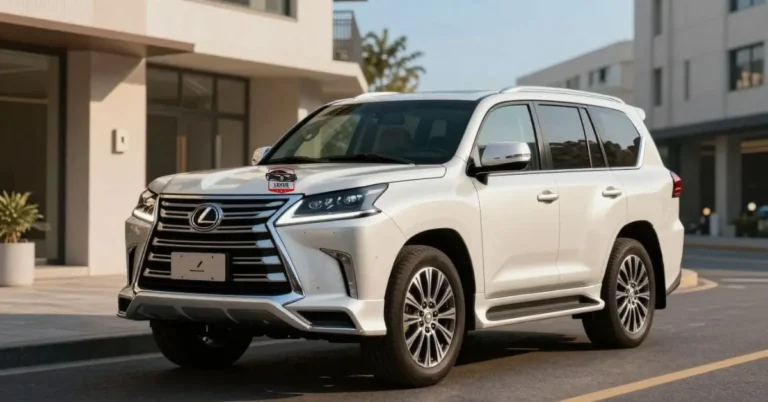
For suburban family buyers seeking more passenger capacity and cargo space, the RX 500h+ represents the sweet spot in the Lexus PHEV lineup. This luxury hybrid SUV combines the refinement Lexus is known for with genuine plug-in capability, offering similar electric range to the NX but in a larger, more accommodating package.
The RX 500h+ demonstrates that towing capacity doesn’t require constant gasoline engine operation—the hybrid mode seamlessly blends power sources to handle sports gear, family road trip luggage, or weekend recreational equipment. The infotainment system integrates charging infrastructure information, helping you locate public charging stations during longer journeys.
Also Read: Lexus SUV Towing Capacity: How to Determine
TX 550h+: The Three-Row Lexus PHEV Model Solution
The TX 550h+ answers a question many growing families ask: can a three-row SUV also be a plug-in hybrid? This largest member of the Lexus PHEV family doesn’t compromise on third-row seating or cargo space while still delivering meaningful electric-only capability for daily driving.
With genuine passenger capacity for seven or eight (depending on trim level), the TX 550h+ targets buyers who previously felt electrification wasn’t compatible with their family size or usage pattern. The badge prestige remains intact while tailpipe emissions drop dramatically during typical suburban family driving patterns.
Electric Range and Real-World Performance

Understanding EV Range vs. Highway Efficiency
The EV range advertised for Lexus plug-in hybrid models represents ideal conditions—moderate temperatures, moderate speeds, minimal climate control usage. Real-world range varies based on your charging habit, driving style, and environmental factors.
Cold weather range loss is a reality for all plug-in vehicles. Winter temperatures can reduce electric range by 20-30%, making that 40-mile rated range potentially 28-32 miles in practice. However, unlike pure electric vehicles, the gasoline engine provides unlimited backup range, eliminating range anxiety entirely.
Highway efficiency in EV mode is lower than city driving due to aerodynamic demands. Most owners find that their GPS history shows daily commute patterns well-suited to electric-only operation, while longer road trip scenarios automatically benefit from hybrid mode operation.
Also Read: Mastering Lexus AWD: A Comprehensive Guide
Charging Infrastructure and Home Charging Realities
Home charging transforms the PHEV ownership experience. With a Level 2 charger installed (often eligible for state incentive programs), you’ll wake up to a full battery every morning. Overnight charging becomes as routine as parking—simply plug in when you arrive home.
While public charging infrastructure continues expanding, most Lexus PHEV owners rarely need it for daily use. The charging port accepts both Level 1 (standard 120V household outlet, very slow) and Level 2 charging (240V dedicated circuit, 3-5 hours for full charge). This flexibility means you can charge anywhere, though Level 2 dramatically improves the experience.
Decision Checklist: Is a Lexus PHEV Right for You?
Analyzing Your Daily Commute and Round-Trip Mileage
Create a decision checklist starting with your driving patterns. Review your GPS history or estimate your typical round-trip mileage for work and errands. If 70% or more of your driving falls within 30-35 miles per day, a Lexus plug-in hybrid will operate predominantly in electric-only driving mode, maximizing fuel efficiency and minimizing emissions.
For the urban professional with a 20-mile total commute, the NX 450h+ could operate weeks without the gasoline engine starting. The suburban family with a 50-mile daily routine would still see significant electric usage on the RX 500h+, with hybrid mode filling the gap seamlessly.
Also Read: Most Fuel Efficient Lexus: How to Choose Model
Evaluating Charging Habit Potential and Usage Pattern
Your charging habit matters more than battery size alone. Can you plug in nightly at home? Is there charging infrastructure at your workplace? The most successful PHEV owners treat charging like smartphone charging—habitual, convenient, not burdensome.
Consider your usage pattern honestly. Frequent road trip travelers covering hundreds of miles weekly may find a standard hybrid or even a mild hybrid more cost-effective, since the PHEV premium pays off primarily through electric-only driving. Conversely, predictable daily routes make the plug-in hybrid SUV economically compelling.
Assessing Passenger Capacity and Cargo Space Needs
The TX 550h+ with third-row seating serves larger families without compromise, while the compact SUV dimensions of the NX 450h+ suit couples or small families prioritizing efficiency. Cargo space remains generous across the lineup, though battery placement slightly reduces cargo volume compared to non-PHEV equivalents.
If sports gear, strollers, or weekly grocery runs define your needs, any Lexus PHEV accommodates easily. For those regularly filling three rows or towing boats and trailers, verify that towing capacity meets your requirements—the electrified powertrains are capable, but specifications vary by model.
Financial Considerations: Incentives, MSRP, and Total Cost
Understanding the Clean Vehicle Tax Credit and Federal Incentive
The clean vehicle tax credit significantly impacts the purchase decision. Current federal incentive programs offer up to $7,500 in tax credits for qualifying PHEV purchases, though eligibility depends on battery capacity, assembly location, and buyer income limits.
Consult the environmental agency and department of motor vehicles resources to verify current incentive availability.State incentive programs add further value—some states offer additional rebates, sales tax exemptions, or HOV lane access for plug-in hybrid vehicles.
California, for example, historically provided substantial additional incentives beyond the federal tax credit. Research your specific state’s programs during the negotiation process.
MSRP, Dealer Markup, and Lease Deal Strategies
The MSRP for Lexus PHEV models commands a premium over standard hybrid equivalents—typically $8,000-$12,000 depending on model and trim level. However, after applying federal and state incentives, the cost parity with conventional luxury SUV options becomes surprisingly close.
Watch for dealer markup practices, especially on newly released models with limited inventory. An authorized dealership should provide transparent pricing, but supply constraints sometimes create artificial scarcity premiums. Use inventory search tools across multiple dealers to establish negotiation leverage.
Lease deal structures can be particularly attractive for PHEVs, as the leasing company typically captures the tax credit and passes savings through reduced monthly payments. Quarter-end deals often provide the most aggressive lease offers as dealers pursue volume targets.
Also Read: 10 Facts Are lexus Reliable You Should Know
Premium Package and Trim Level Value Analysis
Lexus offers various trim levels and premium package options across the PHEV lineup. The decision checklist should weigh which features justify their price increment. The Lexus Safety System+ comes standard across all models, including pre-collision braking, lane departure alert, and adaptive cruise control.
Higher trim levels typically bundle advanced infotainment system features, upgraded cabin build quality materials, and aesthetic enhancements like unique wheel designs and interior finishes. Consider whether badge prestige or specific functional features drive your premium package interest.
Safety, Technology, and Warranty Coverage in Lexus PHEV Models
Lexus Safety System+ and Advanced Driver Assistance
Every Lexus plug-in hybrid includes the comprehensive Lexus Safety System+, delivering pre-collision braking with pedestrian detection, lane departure alert with steering assist, and adaptive cruise control. These systems integrate seamlessly with the hybrid powertrain, using regenerative braking to enhance safety interventions.
The electric motor’s instant torque response actually improves some safety scenarios, enabling quicker evasive acceleration when needed. The quiet operation enhances driver awareness of environmental sounds, while the sophisticated power delivery provides predictable, confidence-inspiring dynamics.
Also Read: How to Use Armor All Smartshield for Ultimate Protection
High-Voltage Warranty and Maintenance Plan
Warranty coverage for Lexus PHEV models includes a robust high-voltage warranty specifically protecting the battery, electric motor, and power control electronics—typically 10 years/150,000 miles. This exceeds the coverage for conventional powertrains, reflecting Lexus’s confidence in reliability.
The included maintenance plan often covers routine services like brake inspection, fluid changes (including coolant for the battery thermal management system), and software update installations. These plans reduce ownership cost while ensuring proper care from technicians trained on PHEV systems.
Infotainment System and Cabin Build Quality
Lexus PHEV models feature advanced infotainment system technology tailored to plug-in ownership. Displays show battery charge level, EV range estimates, energy flow diagrams, and charging location information.
Smartphone integration enables remote climate pre-conditioning while plugged in, ensuring cabin comfort without draining the battery before departure.
The cabin build quality maintains Lexus standards—premium materials, meticulous assembly, and attention to detail that luxury SUV buyers expect. The PHEV badge doesn’t compromise interior refinement; if anything, the additional sound insulation for quiet operation enhances the experience.
Competitive Analysis: How Lexus PHEV Models Stack Up
BMW X3 xDrive30e and Mercedes-Benz GLC 350e Comparison
The competitive analysis starts with German rivals. The BMW X3 xDrive30e offers comparable electric range and sporty dynamics, while the Mercedes-Benz GLC 350e emphasizes refinement and technology. Each approaches the plug-in hybrid SUV mission differently.
Lexus distinguishes itself through reliability reputation and warranty coverage generosity. Owner reviews consistently rank Lexus PHEV models higher for dependability and lower cost of ownership compared to German alternatives. The fuel efficiency advantage varies by model, but real-world range tends to favor Lexus in independent testing.
The towing capacity and cargo space comparison reveals trade-offs—some competitors offer slightly more capability in specific areas, but Lexus provides a more balanced package. For buyers prioritizing long-term reliability over cutting-edge technology features, the Lexus plug-in hybrid approach resonates strongly.
Luxury EV Transition Positioning
Lexus positions its PHEV lineup as the rational step in the luxury EV transition journey. Rather than forcing buyers into full battery-electric vehicles before charging infrastructure, range, and technology maturity align with their needs, the plug-in hybrid provides a pressure-free introduction to electrification.
This philosophy acknowledges that zero-emission capability matters for environmental and economic reasons, but recognizes that range anxiety remains a legitimate concern for many buyers.
The PHEV solution delivers zero tailpipe emissions during electric-only driving—often 60-80% of total miles for typical owners—while maintaining unlimited range confidence.
The Purchase Process: From Test Drive to Ownership
Conducting a Thorough Test Drive
Schedule a comprehensive test drive experiencing both EV mode and hybrid mode operation. Start with a fully charged battery to appreciate the electric-only driving character—the silent power delivery, instant acceleration response, and serene cabin environment.
Deplete the battery during your test to understand hybrid mode transitions. The best systems make these transitions imperceptible. Pay attention to power delivery consistency, the smoothness of the gasoline engine engagement, and overall refinement.
Request routes including highway driving, stop-and-go traffic, and challenging topography.
Working with an Authorized Dealership
Partner with an authorized dealership employing sales staff knowledgeable about PHEV technology, incentive programs, and installation of home charging equipment. Request an inventory search showing all available PHEV models in your region, including various trim levels and premium package configurations.
Understand the price range before negotiating. Armed with knowledge of current federal incentive and state incentive programs, you’ll have negotiation leverage regarding the true net cost. Question any dealer markup above MSRP—competitive dealers won’t charge premiums on in-stock inventory.
Understanding Return Policy and Ownership Transition
Clarify the return policy before finalizing purchase—some states mandate cooling-off periods for vehicle purchases, though this isn’t universal. Lexus’s customer satisfaction focus means most dealers will work to ensure you’re comfortable with your choice.
The ownership transition includes setup for your infotainment system, charging port demonstrations, and scheduling your first coolant check and brake inspection according to the maintenance plan.
Request guidance on accessing HOV lane benefits if applicable in your state, which may require specific decals or registrations with the department of motor vehicles.
Post-Purchase Optimization
After purchase, optimize your experience by establishing a consistent charging habit—most owners prefer plugging in immediately upon arriving home each evening. Monitor your EV range versus expectations, understanding that the first few weeks help you calibrate real-world performance against rated specifications.
Join owner forums to learn from others’ experiences, share tips on maximizing electric operation, and stay informed about software update releases that may enhance performance or features.
The Lexus PHEV ownership community actively shares insights about charging infrastructure locations, efficiency techniques, and long-term reliability experiences.
My Final Thoughts:
The Lexus plug-in hybrid lineup—headlined by the NX 450h+, RX 500h+, and TX 550h+—represents a thoughtfully engineered approach to automotive electrification. These models respect buyer intelligence, acknowledging that the path to sustainable transportation doesn’t require sacrificing practicality, range confidence, or the luxury SUV experience that Lexus owners expect.
For the urban professional seeking lower operating costs and environmental responsibility without lifestyle compromise, the compact SUV efficiency of the NX 450h+ delivers. Suburban family buyers needing passenger capacity, cargo space, or even three-row seating find compelling answers in the RX 500h+ and TX 550h+, respectively.
The combination of meaningful electric range, seamless hybrid mode integration, comprehensive warranty coverage, and Lexus’s reliability reputation creates a value proposition that transcends simple specification comparisons.
When federal incentive and state incentive programs reduce the price premium, the cost parity argument becomes even more compelling.Your decision checklist should evaluate your specific daily commute patterns, round-trip mileage, charging habit potential, and long-term ownership priorities.
With the right match between your usage pattern and the capabilities of Lexus PHEV models, you’ll discover that plug-in hybrid technology has matured into a genuinely practical, economically sensible, and environmentally responsible choice—one that maintains the badge prestige and driving refinement that attracted you to the Lexus brand in the first place.
The future of automotive electrification is happening now, and Lexus’s plug-in hybrid approach ensures you can participate on your terms, with your timeline, and with the confidence that comes from partnering with a manufacturer committed to your long-term satisfaction.
FAQs
Is the Lexus RX 350 a woman’s car?
Women love this SUV, and it is a good buy for men as well. This SUV appeals to men buyers who are willing to set aside their macho tendencies. In this context, gender perception influences vehicle preference and plays an important role in the buying decision.
What year Lexus RX 450h to avoid?
The RX 450h is considered a reliable used buy with strong used car reliability across the 2009–2016 generation and the 2016–2022 generation. The Lexus RX 450h has solid reliability ratings, with no years to avoid, making it a dependable option for a used vehicle purchase.
Which year Lexus RX 450h to avoid?
When discussing the Lexus RX 450h, the years to avoid are often linked to the least reliable years in overall Lexus RX reliability. The second generation Lexus RX, particularly the 2004–2007 Lexus RX, is known for common problems and reliability issues, making these problem years a concern for anyone considering a used Lexus RX.
Is the Lexus GX bigger than the Grand Highlander?
The Lexus GX 550 and the Toyota Grand Highlander are close in a vehicle width comparison, as they have the same width. In terms of vehicle length comparison, the Lexus GX 550 is slightly shorter, which contributes to easier to park characteristics.
What are the common Lexus GX problems?
Issues with the gear selector and linkage or the transmission computer can lead to rough shifting or a slipping transmission. Problems with the transmission sensor or solenoid may also affect performance, while improper clutch adjustment can worsen these issues.

I’m Kainat Ansari, with 3+ years immersed in everything Lexus—from advising first-time ES buyers to tracking down rare RC F Track Editions for performance enthusiasts. I combine technical knowledge of hybrid systems, F Sport packages, and cutting-edge safety tech with practical expertise in lease programs, certified pre-owned advantages, and real ownership costs. My goal is simple: help people understand why Lexus builds some of the most reliable, refined luxury vehicles on the road and find the perfect match for their lifestyle.