How to Use the Lexus RX 350 Safety Features Correctly 2026
The Lexus RX 350 is one of the best-equipped luxury SUVs on the market when it comes to safety technology. It comes loaded with an impressive array of driver assistance systems, collision prevention tools, and passive safety features that work together to protect you, your passengers, and everyone else sharing the road. But here is the honest truth that most owners never hear at the dealership: owning these features and actually using them correctly are two completely different things.
A surprising number of Lexus RX 350 owners drive for months — sometimes years — without ever properly configuring or fully understanding the safety systems their car came equipped with. They know the car has pre-collision warning. They have seen the lane departure alert flash once or twice. But they have never taken the time to learn exactly how each system works, what its limitations are, and how to get the maximum benefit from it in real driving situations.
This guide changes that. We walk through every major safety feature on the Lexus RX 350 step by step, explaining what each system does, how to activate and configure it correctly, when it works best, and what common mistakes drivers make that reduce its effectiveness. By the time you finish reading, you will have a complete, practical understanding of the Lexus RX 350 safety package and the confidence to use every part of it properly.
Also Read: Lexus RX 350 for Sale: How to Find the Best Near You
Short Answer About Lexus RX 350
Lexus RX 350F is a luxury midsize SUV that combines elegance, comfort, and advanced performance features. Designed for drivers who value both style and practicality, the RX 350F offers a smooth and refined driving experience.
Understanding the Lexus RX 350 Safety Suite Overview

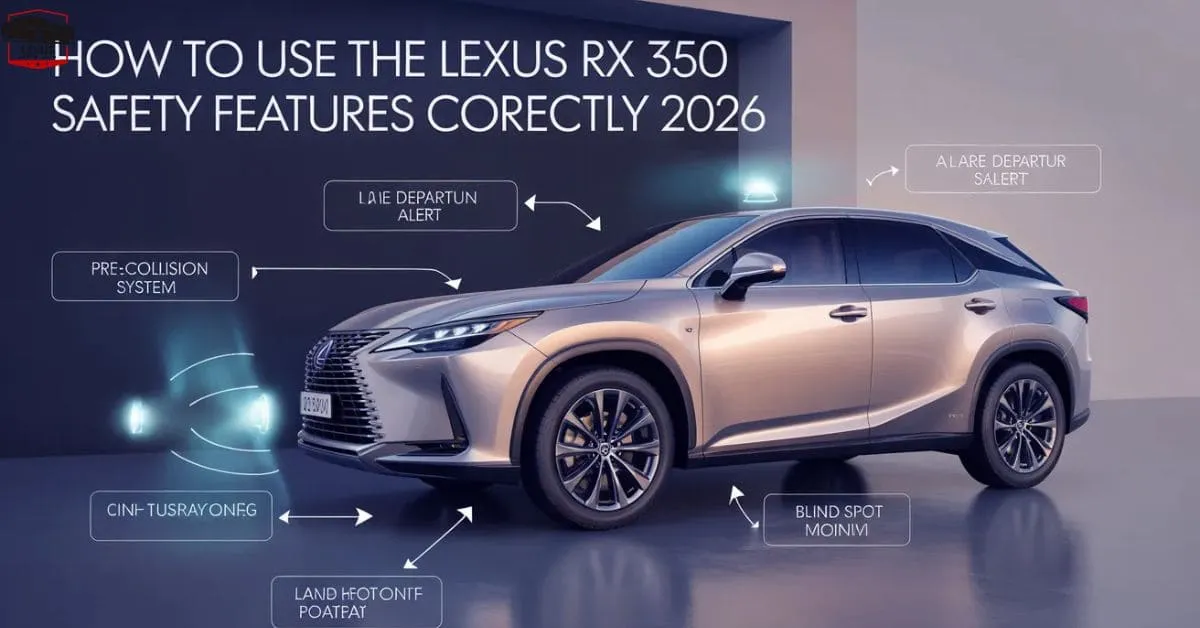
Before diving into individual systems, it helps to understand how the Lexus RX 350 safety features work together as a unified package. Lexus groups most of the active safety features under the Lexus Safety System+ umbrella — a suite that combines radar, cameras, and sensor technologies to monitor the road ahead, the lanes around you, and the traffic behind.
The core components of the Lexus RX 350 safety technology include the Pre-Collision System with Pedestrian Detection, Lane Departure Alert with Steering Assist, Automatic High Beams, Radar Cruise Control, Blind Spot Monitor, Rear Cross Traffic Alert, Lane Change Assist, and Rear Backup Camera. Higher trim levels also include features like Intelligent Clearance Sonar and Panoramic View Monitor.
Understanding that these systems are interconnected is the first step toward using them correctly. The radar unit mounted behind the front grille feeds data to multiple systems simultaneously. The forward-facing camera mounted near the rearview mirror handles lane detection and sign recognition.
When either of these primary sensors is blocked — by mud, ice, heavy rain, or a cracked windshield — multiple safety systems are affected at once, not just one. Knowing this helps you understand why keeping your Lexus RX 350’s sensors clean and unobstructed is a genuine safety priority, not just a maintenance note.
Also Read: How to Drive the 350F in Track Mode Step by Step 2026
How to Set Up the Lexus RX 350 Pre-Collision System Correctly
The Pre-Collision System, or PCS, is arguably the most important active safety feature on the Lexus RX 350. It uses the front radar and camera to monitor the road ahead for vehicles and pedestrians, warns you when a collision is imminent, and in certain situations automatically applies the brakes to reduce impact severity or Activating and Configuring PCS on the Lexus RX 350
The Pre-Collision System on the Lexus RX 350 is active by default every time you start the car, but many drivers never configure its sensitivity settings to match their personal driving style. To access the PCS settings, navigate to the Settings menu on the Lexus RX 350 center touchscreen, select Vehicle Settings, then Safety System, and then Pre-Collision System. Here you will find sensitivity options — typically Early, Standard, and Late — that control how far in advance the system begins issuing warnings.
For most drivers in typical urban and suburban conditions, the Standard setting is well-calibrated and appropriate. If you do a lot of highway driving at higher speeds, the Early setting gives you more reaction time by issuing warnings sooner. The Late setting is rarely recommended because it reduces the time available for both you and the car to respond to an emergency.
Important Tip: After configuring the Lexus RX 350 Pre-Collision System sensitivity, drive in your normal environment for a few days and note whether the alerts feel well-timed. If you are getting frequent false alarms in slow traffic or parking situations, adjust to Standard. If alerts feel like they are coming too late at highway speeds, switch to Early.
Also Read: 2025 is500: Discover the Future 2026
What to Do When the Lexus RX 350 PCS Warning Activates
When the Lexus RX 350 Pre-Collision System detects an imminent collision risk, it first flashes a visual warning on the instrument cluster display and sounds an audible alert. This is your cue to respond — brake firmly and steer if necessary. Do not wait for the automatic braking to engage. The automatic braking function is a last-resort safety net, not a substitute for your own response. Drivers who understand this get the most benefit from the system because they treat the warning as urgent information rather than background noise.
If the situation develops faster than you can react and automatic pre-collision braking engages, the Lexus RX 350 will apply significant brake force to either avoid the obstacle or reduce your speed before impact. After the system intervenes, regain control of the vehicle smoothly, pull over safely if needed, and check that the car and all occupants are okay before continuing.
Also Read: Lexus IS300 Fuel Tank Capacity: Everything You Should Know
Using the Lexus RX 350 Radar Cruise Control Correctly
The Lexus RX 350 Radar Cruise Control, also called Dynamic Radar Cruise Control, is a significant upgrade over conventional cruise control. It uses the front radar system to maintain a set following distance behind the vehicle ahead, automatically adjusting your speed to keep that gap consistent — slowing when traffic slows and accelerating back to your set speed when the road clears.
Activating Lexus RX 350 Radar Cruise Control Step by Step
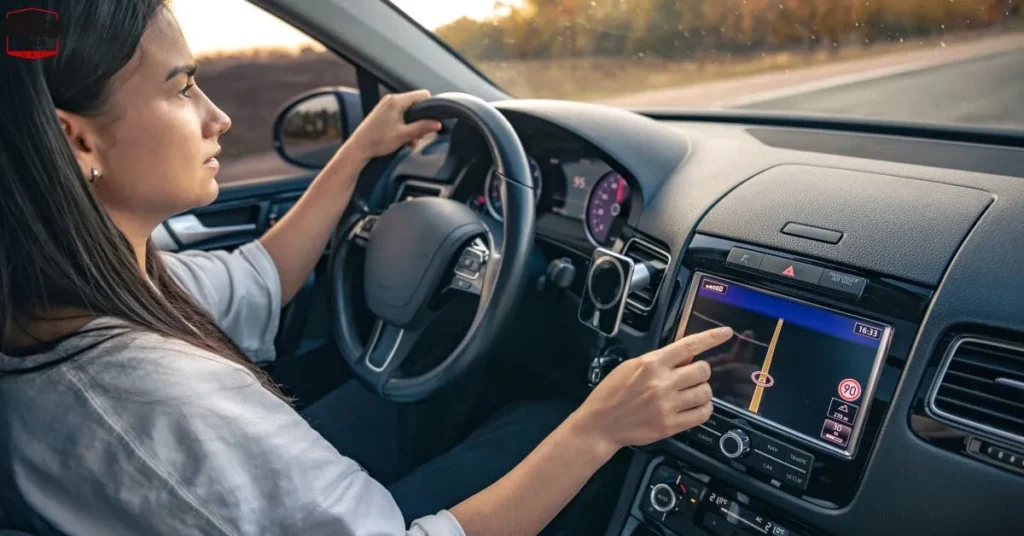
To activate Radar Cruise Control on the Lexus RX 350, press the main cruise control button on the steering wheel to switch the system on — an indicator light will appear on the instrument cluster. Accelerate to your desired highway speed, then press the Set button to engage cruise control at that speed. The system will now maintain that speed and automatically manage following distance.
Use the following distance adjustment button — marked with a car icon and distance indicator on the steering wheel — to set your preferred gap to the vehicle ahead. The Lexus RX 350 offers three or four following distance settings depending on model year, ranging from close to far.
For highway driving in normal conditions, a medium to far following distance setting is the safest and most comfortable choice. In heavy traffic where frequent cut-ins from other vehicles are common, a slightly closer setting can prevent your gap from constantly being filled by lane-changers.
Also Read: Lexus IS500 for Sale Houston: How to Find a 2026
When to Override or Disengage Lexus RX 350 Radar Cruise Control
The Lexus RX 350 Radar Cruise Control is excellent on clear highways with consistent traffic but has important limitations in certain situations. Disengage it manually whenever you encounter heavy rain or fog that could interfere with radar performance. Cancel it on winding roads or hilly terrain where rapid speed changes are needed. Override it with the brake pedal any time the system seems to be responding too slowly to a developing situation ahead of you. The Lexus RX 350 Radar Cruise Control is a powerful comfort and safety tool, but it functions best as an assistant to an alert driver, not as a replacement for one.
Important Tip: When using Lexus RX 350 Radar Cruise Control on multi-lane highways, stay in the right lane or center lane where possible. The system can only track the vehicle directly ahead in your lane. It will not slow automatically for a car cutting in from the side until that car is fully in your lane.
Also Read: How to Find a Lexus RC F for Sale Houston 2026
How to Use the Lexus RX 350 Lane Departure Alert Correctly
The Lane Departure Alert on the Lexus RX 350 uses the forward-facing camera to monitor lane markings on both sides of the car. When the system detects that the car is drifting toward a lane boundary without a turn signal being activated, it issues a visual and audible warning. On models with Steering Assist, it can also apply gentle corrective steering pressure to help guide the car back toward the center of the lane.
Configuring Lane Departure Alert on Your Lexus RX 350
To enable or disable Lane Departure Alert, access the safety settings through the Lexus RX 350 touchscreen menu under Vehicle Settings and then Lane Departure Alert. You can toggle the system on or off and, on equipped models, turn Steering Assist on or off independently. Both features are recommended to remain active during normal highway driving.
One important configuration point: the Lexus RX 350 Lane Departure Alert automatically deactivates when you activate the turn signal in the direction of the lane drift. This means the system correctly distinguishes between an intentional lane change and an unintentional drift. Always use your turn signal when changing lanes — it tells both other drivers and your car’s safety system that your movement is deliberate.
Also Read: How to Compare Lexus IS 350 Dimensions With Other 2026
Getting the Most From Lexus RX 350 Lane Departure Alert
The Lane Departure Alert on the Lexus RX 350 works best on roads with clearly visible, well-maintained lane markings. It performs less reliably on roads with faded markings, in heavy rain that obscures markings, or in construction zones with temporary or confusing lane layouts. In these conditions, be prepared for occasional false alerts and do not rely on the system to substitute for your own visual lane tracking.
Many drivers initially find Lane Departure Alert alerts annoying and disable the system. This is a mistake. The data on drowsy driving and inattention-related lane drifts is clear — Lane Departure Alert prevents real accidents by catching moments of inattention that drivers do not even realize they are experiencing. Leave it on, and if alerts feel excessive, review whether you are consistently centering the car in your lane or drifting habitually toward one side.
How to Use the Lexus RX 350 Blind Spot Monitor Correctly
The Blind Spot Monitor on the Lexus RX 350 uses rear-mounted radar sensors to detect vehicles in your blind spot zones — the areas alongside and slightly behind the car that are not visible in the door mirrors. When a vehicle enters a monitored zone, a warning indicator illuminates in the corresponding side mirror. If you then activate your turn signal to change lanes in that direction, the system escalates to an audible alert as an additional warning.
Setting Up and Understanding Lexus RX 350 Blind Spot Monitor
The Blind Spot Monitor activates automatically when the Lexus RX 350 is traveling above approximately 10 mph. There is no complex configuration required — the system uses your vehicle’s position and the radar returns to determine whether a vehicle is in the monitored zones. The side mirror warning light is the primary indicator. Learn to check these lights as part of your normal mirror-checking routine before every lane change, rather than relying solely on a glance in the mirror itself.
One important thing to understand about the Lexus RX 350 Blind Spot Monitor is that it monitors the rear quarter zones specifically. It does not cover vehicles that are already alongside you in adjacent lanes. If you are driving at similar speed to a vehicle that has been beside you for some time, that vehicle may not trigger the BSM warning. Always perform a physical head-check in addition to checking the mirror indicators before any lane change.
Using Rear Cross Traffic Alert on the Lexus RX 350
Closely related to the Blind Spot Monitor, the Rear Cross Traffic Alert system uses the same rear radar sensors to detect vehicles approaching from the sides when the Lexus RX 350 is reversing out of a parking space or driveway. When it detects an approaching vehicle, it alerts you with an audible alarm and a visual warning on the backup camera display.
To get the most from this feature, keep your reversing speed low — below 5 mph — which gives both the system and yourself more time to react to detected cross traffic. The Rear Cross Traffic Alert on the Lexus RX 350 is particularly valuable in parking lots where sightlines are blocked by larger vehicles, but it should complement rather than replace a careful physical check of both directions before backing out.
Important Tip: The Lexus RX 350 Blind Spot Monitor and Rear Cross Traffic Alert sensors are located in the rear bumper. Keep this area clean and free of mud, snow, or heavy dirt buildup, which can interfere with radar performance and reduce detection accuracy.
How to Use the Lexus RX 350 Automatic High Beam System

The Automatic High Beam system on the Lexus RX 350 uses the forward camera to detect the headlights of oncoming vehicles and the taillights of vehicles ahead, automatically switching between high and low beams to maximize your visibility without blinding other drivers. It is a genuinely useful feature for nighttime driving on unlit roads, but using it correctly requires understanding its behavior and limitations.
Activating Automatic High Beams on the Lexus RX 350
To enable Automatic High Beams, set your headlight switch to the Auto or On position and then push the turn signal stalk away from you — the same motion you would use to manually select high beams — until you hear a click and see an Automatic High Beam indicator illuminate on the instrument cluster. The system will now manage high and low beam selection automatically based on detected traffic ahead.
In urban environments with frequent oncoming traffic and well-lit roads, the Automatic High Beam system will spend most of its time in low beam mode. Its real value emerges on rural roads and highways where oncoming traffic is infrequent and extended high beam use significantly improves your ability to see pedestrians, animals, and hazards well ahead of the car.
Limitations of the Lexus RX 350 Automatic High Beam System
The Automatic High Beam system relies on the forward camera to detect light sources. In very heavy rain, dense fog, or dusty conditions, the camera’s ability to detect oncoming lights accurately can be reduced. In these conditions, the system may switch to high beams when it should not — blinding oncoming drivers — or stay in low beam when high beams would be appropriate. Monitor the system’s behavior in poor weather and be prepared to take manual control of your high beams when conditions challenge the camera’s detection capability.
How to Use the Lexus RX 350 Backup Camera and Parking Sensors
The Lexus RX 350 comes standard with a rear backup camera that activates automatically when reverse gear is selected. Higher trim levels add the Panoramic View Monitor, which combines multiple cameras to provide a bird’s-eye overhead view of the area surrounding the car — an extraordinary tool for parking in tight spaces.
Using the Lexus RX 350 Backup Camera Correctly
When the Lexus RX 350 backup camera activates, the touchscreen displays a live view from the rear of the car with three sets of guide lines overlaid on the image. The red zone closest to the car indicates distances under approximately one foot. The yellow zone indicates one to three feet. The green zone indicates three to six feet. Use these guide lines as reference points rather than treating them as precise measurements — always combine camera monitoring with physical checks of the area around the car before and during any reversing maneuver.
Keep the backup camera lens clean at all times. The lens is located in or near the Lexus RX 350 rear license plate area and is exposed to road grime, rain, and dust. A dirty lens produces a degraded image that reduces the camera’s usefulness precisely when you need it most. Wipe it clean as part of your regular car washing routine.
Using Intelligent Clearance Sonar on the Lexus RX 350
Equipped models include Intelligent Clearance Sonar, which uses ultrasonic sensors around the car’s perimeter to detect nearby obstacles and alert the driver with audio tones that increase in frequency as the obstacle gets closer. In Park Assist mode, the system can also automatically apply the brakes if you are about to make contact with an object at low speed in a parking situation.
The Intelligent Clearance Sonar on the Lexus RX 350 is most effective at speeds below 10 mph in parking scenarios. It is not designed for road speed use. When parallel parking or navigating tight parking structures, let the sonar tones guide your movements — short, well-spaced beeps mean you have comfortable clearance, while rapid or continuous tones mean you need to stop and reassess your position.
Common Mistakes Lexus RX 350 Owners Make With Safety Features
Even careful drivers make predictable errors when using advanced safety systems. Here are the most common mistakes Lexus RX 350 owners make and how to avoid each one:
- Relying on Pre-Collision System as a substitute for attentive driving — PCS is a last resort backup, not a reason to pay less attention to the road ahead. Always keep your eyes forward and your reaction time ready.
- Disabling Lane Departure Alert because of occasional false alerts — Instead of disabling it, investigate why false alerts occur. Usually it is road markings, the driver’s position in the lane, or a specific road type that can be managed differently.
- Not cleaning radar and camera sensors regularly — Mud, ice, heavy rain residue, and road grime on the front grille radar or the forward camera window degrade multiple safety systems simultaneously. Clean them during every wash.
- Treating Radar Cruise Control as fully autonomous driving — Radar Cruise Control manages speed and following distance only. It does not steer. You must remain attentive and ready to take over at any moment.
- Ignoring Blind Spot Monitor indicators because they occasionally alert falsely — If the system alerts, check physically before changing lanes. A false alarm costs you two seconds. A missed real vehicle costs far more.
- Assuming Rear Cross Traffic Alert covers all reversing scenarios — The system monitors vehicles approaching from the sides. It does not detect stationary objects directly behind the car. Always look and check the camera before reversing.
Keeping Lexus RX 350 Safety Systems Working at Their Best
The safety features on the Lexus RX 350 are only as effective as the hardware and software running them. Here are the key maintenance steps that keep every safety system performing at full capability:
- Keep the front radar unit clear — the sensor behind the Lexus RX 350 front grille must remain unobstructed. Remove any front license plate frames, aftermarket grille inserts, or accessories that cover this area.
- Keep the forward camera window clean — this small camera lens near the rearview mirror is critical for lane detection, sign recognition, and automatic high beams. If the windshield is cracked near this camera, repair it promptly as distortion affects camera performance.
- Keep rear bumper sensors clean — the Blind Spot Monitor and Rear Cross Traffic Alert radar units are in the rear bumper. Regular cleaning prevents performance degradation from accumulated grime.
- Keep software updated — Lexus periodically releases software updates for safety system calibration. When your dealer notifies you of available updates during service visits, allow them to be installed.
- Recalibrate after windshield replacement — if the Lexus RX 350 windshield is replaced for any reason, the forward camera must be professionally recalibrated. Failure to do this results in lane detection, Pre-Collision System, and Automatic High Beam errors.
- Never cover or paint over sensor locations — aftermarket accessories, sticker decorations, or paint touch-ups that cover radar or camera locations can permanently degrade safety system performance.
MY Final Thoughts:
The Lexus RX 350 is genuinely one of the most safety-equipped vehicles in its segment, and the technology it carries has been proven to reduce accident rates, lower injury severity, and save lives in real-world conditions. But that technology only delivers its full potential when drivers understand it, configure it correctly, and use it as an informed partner in their driving rather than ignoring it or misunderstanding it.
Every step in this guide — from configuring your Pre-Collision System sensitivity and setting your Radar Cruise Control following distance, through using Blind Spot Monitor as part of your lane change routine and keeping sensors clean for reliable performance — represents a real, practical action that increases the safety of every journey you take in the Lexus RX 350.
The most important thing to carry away from this guide is the understanding that the Lexus RX 350 safety systems are driver assistance features, not autonomous safety guarantees. They make an attentive, informed driver significantly safer. They cannot fully compensate for distraction, fatigue, or reckless driving. Use them correctly, maintain them properly, and stay engaged behind the wheel — and the Lexus RX 350’s safety package will serve you extraordinarily well for every mile you drive.
Which Lexus has the best safety features?
For 2025, the NX has earned a coveted IIHS Top Safety Pick award. This achievement is particularly notable given the new, tougher IIHS criteria, including more demanding crash-test evaluations and improved headlight requirements. The NX’s proactive approach to safety is evident in every detail.
Does driver assist reduce accidents?
Driver assistance technologies are transforming modern transportation by significantly improving road safety. Advanced driver assistance systems (ADAS features) are designed to support drivers in preventing accidents and reducing human error. These intelligent safety features combine sensors, cameras, and radar to monitor surroundings and respond to potential hazards in real time.
Can you remote start a Lexus with a key fob?
Most Lexus models with remote start make it simple to start your vehicle without using an app or going through extra steps. By using the key fob, drivers can remotely start their Lexus vehicle in just a few easy actions. This feature provides convenience and comfort, especially in extreme weather conditions, allowing the cabin to heat or cool before you enter.
What is double locking in Lexus?
Thus, the doors cannot be opened either from the inside or the outside of the vehicle. D To lock the doors with this system, pressing the transmitter’s LOCK switch, then pressing it again within 5 seconds activates the double locking system.
What is the difference between the 2025 and 2026 Lexus RX350?
The 2026 Lexus RX 350 and the 2025 Lexus RX 350 are mechanically identical, offering the same turbocharged engine, fuel economy, cargo space, and towing capacity. Both model years deliver reliable performance, smooth handling, and a comfortable driving experience, making them popular choices in the luxury SUV segment.

I’m Fiza Ansari, a Lexus specialist with 2+ years of experience helping drivers find their perfect luxury vehicle. From the sporty RC F to the elegant ES sedan and family-friendly RX—I know each model thoroughly. My expertise covers performance features, ownership costs, leasing options, and certified pre-owned benefits. Whether you’re a first-time luxury buyer or upgrading to an F Sport model, I provide honest guidance to help you make the right choice for your lifestyle and budget.