
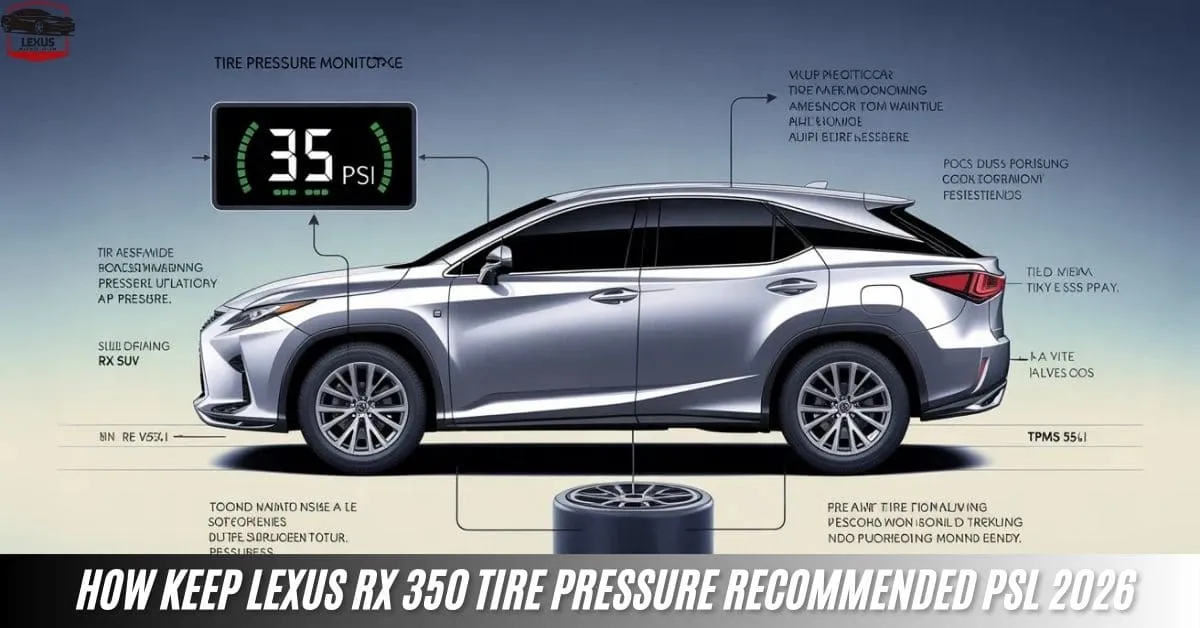
How Keep Lexus Rx 350 Tire Pressure Recommended PSl 2026
Maintaining the correct Lexus Rx 350 Tire Pressure is one of the most important yet overlooked aspects of vehicle care. Whether you drive your RX 350 daily for commuting or long-distance travel, keeping the right tire pressure ensures safety, better fuel economy, smoother handling, and longer tire life.
In this detailed guide, you’ll learn everything about from recommended PSI levels to seasonal adjustments, monitoring systems, maintenance tips, and common mistakes to avoid.
Also Read: Lexus RX Interior: A Sophisticated Cabin
Short Answer About Lexus Rx 350 Tire Pressure
Maintaining the correct Lexus Rx 350 Tire Pressure is essential for safety, performance, and fuel efficiency. Proper tire pressure ensures better handling, shorter braking distance.
And a smoother ride while also extending tire life and improving gas mileage. Underinflated or overinflated tires can cause uneven wear, poor traction, and even blowouts.
By checking your tire pressure monthly and adjusting it according to seasonal temperature changes, you protect both your vehicle and passengers.
The Lexus RX 350 delivers premium comfort and performance, and keeping the right tire pressure helps maintain that luxury driving experience every day.
Why Lexus Rx 350 Tire Pressure Matters So Much

Your SUV is engineered for performance, comfort, and safety. However, even the most advanced vehicle cannot perform properly if the tires are not inflated correctly.
Correct Lexus Rx 350 Tire Pressure helps:
- Improve fuel efficiency
- Enhance braking performance
- Ensure even tire wear
- Provide stable steering control
- Reduce the risk of blowouts
- Maintain smooth ride quality
Underinflated or overinflated tires may look normal but can significantly impact your vehicle’s performance and safety.
Also Read: Maximize Your Lexus RX 350 Cargo Space: A Guide
Recommended Lexus Rx 350 Tire Pressure (PSI)
The standard recommended Lexus Rx 350 Tire Pressure for most models is:
- Front Tires: 33–35 PSI
- Rear Tires: 33–35 PSI
However, exact PSI may vary depending on the model year and tire size.
To find the exact pressure for your vehicle:
- Open the driver-side door.
- Check the sticker on the door jamb.
- Look in the owner’s manual.
Always follow the manufacturer’s recommendation rather than what’s printed on the tire sidewall. The number on the tire shows maximum pressure, not the recommended daily driving PSI.
Also Read: How to Find a Lexus RX Hybrid Dealer Near Me Houston 2026
How to Check Lexus Rx 350 Tire Pressure Properly

Checking Lexus Rx 350 Tire Pressure is simple and should be done at least once a month.
Step-by-Step Guide:
- Use a reliable tire pressure gauge.
- Check pressure when tires are cold (before driving or after 3+ hours parked).
- Remove valve cap.
- Press gauge firmly onto valve stem.
- Read PSI.
- Inflate or deflate as needed.
Cold tires give the most accurate reading because driving heats the air inside, increasing PSI temporarily.
Also Read: 2022 White Lexus: Luxury, Performance, and Style
Lexus Rx 350 Tire Pressure Monitoring System (TPMS)
Modern RX 350 models come equipped with a Tire Pressure Monitoring System (TPMS).
The TPMS light looks like a horseshoe with an exclamation mark. If this light turns on:
- One or more tires are underinflated.
- There may be a slow leak.
- Sudden temperature drop may have reduced PSI.
Even with TPMS, you should manually check regularly because TPMS alerts you only when pressure drops significantly.
Seasonal Changes and Lexus Rx 350 Tire Pressure
Temperature affects tire pressure dramatically.
- For every 10°F drop in temperature, PSI decreases by about 1–2 pounds.
- In winter, your Lexus Rx 350 Tire Pressure may fall below recommended levels.
- In summer, heat can increase PSI.
Effects of Low Lexus Rx 350 Tire Pressure

Driving with low can cause:
- Increased fuel consumption
- Uneven tire wear (shoulder wear)
- Poor handling
- Longer braking distance
- Tire overheating
- Risk of blowout
Underinflated tires create more rolling resistance, forcing your engine to work harder.
Also Read: Lexus RX Prices 2026: How to Get the Best Deal
Effects of High Lexus Rx 350 Tire Pressure
Overinflation is equally dangerous.
High Lexus Rx 350 Tire Pressure may result in:
- Harsh ride quality
- Reduced traction
- Center tread wear
- Higher risk of damage from potholes
- Reduced contact patch with the road
Always stick to recommended PSI, not maximum PSI.
Also Read: How to Drive a Hybrid Lexus RX 350 for Maximum Efficiency
How Often Should You Check Lexus Rx 350 Tire Pressure?
Experts recommend checking :
- Once every month
- Before long road trips
- When seasons change
- When TPMS warning light appears
Routine checks prevent unexpected tire issues.
Best Tools for Monitoring Lexus Rx 350 Tire Pressure
You can maintain correct Lexus Rx 350 Tire Pressure using:
- Digital tire pressure gauge
- Portable air compressor
- Smart TPMS monitoring apps
- Air pumps at fuel stations
A digital gauge is more accurate than older pencil-style gauges.
Also Read: Lexus RX 500h Price: Explore the Hybrid Luxury SUV
Lexus Rx 350 Tire Pressure for Heavy Loads
If carrying heavy cargo or multiple passengers, check your manual. Some models may recommend slight adjustments in Lexus Rx 350 Tire Pressure for full-load conditions.
Never guess. Always confirm manufacturer specifications.
Lexus Rx 350 Tire Pressure and Fuel Efficiency
Maintaining correct Lexus Rx 350 Tire Pressure can improve gas mileage by up to 3–5%.Underinflated tires increase rolling resistance, forcing your engine to burn more fuel. Proper PSI equals better mileage and savings over time.
Also Read: Best Lexus 2024 RX350: Elevate Your Driving Experience
Resetting Lexus Rx 350 Tire Pressure Light
After correcting , you may need to reset the TPMS.
Steps (may vary by year):
- Turn ignition to ON.
- Locate TPMS reset button (often below steering wheel).
- Press and hold until TPMS light blinks.
- Drive for 10–20 minutes.
Consult your owner’s manual for exact instructions.
Common Mistakes When Managing Lexus Rx 350 Tire Pressure

Avoid these mistakes:
- Checking pressure when tires are hot
- Ignoring TPMS warning
- Using sidewall PSI instead of recommended PSI
- Forgetting spare tire pressure
- Inflating unevenly
Correct management prevents costly repairs.
Lexus Rx 350 Tire Pressure and Tire Lifespan
Proper Lexus Rx 350 Tire Pressure can extend tire life significanlyIn correct pressure causes uneven tread wear, meaning you may need replacement sooner Rotate tires every 5,000–7,500 miles for best results.
Signs Your Lexus Rx 350 Tire Pressure Is Wrong
Watch for:
- Vehicle pulling to one side
- Vibrations while driving
- Reduced MPG
- Visible tire sagging
- TPMS warning light
Early detection helps avoid accidents.
Professional Maintenance for Lexus Rx 350 Tire Pressure
While checking Lexus Rx 350 Tire Pressure at home is easy, professional inspections ensure:
- Proper tire alignment
- Balanced wheels
- No hidden leaks
- Accurate calibration of TPMS
Annual service checks are recommended.
Lexus Rx 350 Tire Pressure and Road Safety
Maintaining proper Lexus Rx 350 Tire Pressure directly affects:
- Cornering stability
- Emergency braking
- Wet road traction
- Overall control
Correct pressure maximizes your SUV’s advanced safety features.
Word Guide
Maintaining the correct is one of the most important responsibilities of owning a luxury SUV. While many drivers focus on oil changes, detailing, or engine performance, tire pressure maintenance often gets ignored — and that mistake can cost you safety, fuel efficiency, comfort, and money.
In this complete guide, we will explore every important detail about including recommended PSI levels, seasonal adjustments, tire pressure monitoring systems, fuel economy impact, troubleshooting, professional maintenance, and expert tips to keep your vehicle performing at its best.
Understanding Lexus Rx 350 Tire Pressure Basics

Before going deep into maintenance, it is important to understand what Lexus Rx 350 Tire Pressure actually means.
Tire pressure is measured in PSI (pounds per square inch). This number tells you how much air is inside your tires. The manufacturer carefully calculates the ideal PSI for balance between:
- Comfort
- Handling
- Fuel efficiency
- Load capacity
- Safety
Incorrect Lexus Rx 350 Tire Pressure can affect all of these factors.
Recommended Lexus Rx 350 Tire Pressure (Factory Guidelines)
For most models of the Lexus RX 350, the recommended s:
- Front Tires: 33–35 PSI
- Rear Tires: 33–35 PSI
However, this may vary slightly depending on:
- Model year
- Tire size
- Trim level
- Load configuration
Where to Find Exact Lexus Rx 350 Tire Pressure
You can confirm your exact recommended PSI here:
- Driver-side door jamb sticker
- Owner’s manual
- Inside fuel door (in some models)
Never rely on the number printed on the tire sidewall — that number shows the maximum pressure, not the recommended daily driving pressure.
Why Correct Lexus Rx 350 Tire Pressure Is Critical
Keeping proper impacts:
1. Road Safety
Proper PSI ensures maximum tire contact with the road. This improves:
- Braking distance
- Steering response
- Emergency maneuver stability
- Wet road traction
Low pressure increases risk of blowouts.
2. Fuel Efficiency
Underinflated tires increase rolling resistance. That means your engine works harder and burns more fuel Correct can improve mileage by 3–5%
3. Tire Longevity
Improper pressure causes uneven tread wear:
- Low pressure = wear on tire shoulders
- High pressure = wear in center tread
Balanced PSI extends tire lifespan significantly.
4. Ride Comfort
The RX 350 is designed for smooth luxury driving. Incorrect Lexus Rx 350 Tire Pressure can cause:
- Harsh ride
- Bumpy handling
- Vibrations
Proper PSI preserves the premium comfort experience.
Winter Lexus Rx 350 Tire Pressure Tips
Cold weather reduces PSI quickly. During winter:
- Check pressure weekly
- Inflate when tires are cold
- Expect TPMS warning light more often
Summer Lexus Rx 350 Tire Pressure Tips
Hot weather expands air inside tires.
- Do not overinflate
- Check in morning before driving
- Avoid exceeding recommended PSI
How to Check Lexus Rx 350 Tire Pressure at Home
Checking Lexus Rx 350 Tire Pressure is simple.
Tools Needed:
- Digital tire pressure gauge
- Air compressor or pump
Step-by-Step:
- Park vehicle for at least 3 hours.
- Remove valve cap.
- Attach gauge firmly.
- Note PSI reading.
- Adjust if needed.
- Replace valve cap securely.
Repeat for all four tires — and don’t forget the spare.
Lexus Rx 350 Tire Pressure Monitoring System (TPMS)

Most modern RX 350 models include a built-in Tire Pressure Monitoring System.
Sensors inside each wheel monitor Lexus Rx 350 Tire Pressure in real time. If pressure drops significantly, the dashboard warning light activates.
What To Do When TPMS Light Turns On
- Check all tires manually.
- Inflate to recommended PSI.
- Reset system if necessary.
If light flashes repeatedly, there may be a sensor issue.
Resetting Lexus Rx 350 Tire Pressure Light
After correcting Lexus Rx 350 Tire Pressure, follow these steps (varies by year):
- Turn ignition to ON (engine off).
- Locate TPMS reset button (under steering wheel).
- Press and hold until light blinks.
- Drive 10–20 minutes.
Consult your manual for exact instructions.
Lexus Rx 350 Tire Pressure for Long Road Trips
Before highway travel:
- Check Lexus Rx 350 Tire Pressure
- Inspect tread depth
- Look for cracks or nails
- Check spare tire
High-speed driving increases heat, making proper PSI even more important.
Lexus Rx 350 Tire Pressure for Heavy Loads
If carrying:
- 5 passengers
- Luggage
- Cargo
Your Lexus Rx 350 Tire Pressure may need slight adjustment. Always check manual load specifications.
Signs Your Lexus Rx 350 Tire Pressure Is Too Low
Watch for:
- Steering feels heavy
- Vehicle pulls to one side
- Poor acceleration
- Reduced MPG
- Tire looks flattened
Low Lexus Rx 350 Tire Pressure is dangerous and should be corrected immediately.
Signs Your Lexus Rx 350 Tire Pressure Is Too High
Ove inflation symptoms:
- Rough ride
- Skidding on wet roads
- Excess center tread wear
- Increased road noise
Balanced Lexus Rx 350 Tire Pressure ensures optimal contact with pavement.
How Often Should You Check Lexus Rx 350 Tire Pressure?
Experts recommend:
- Once every month
- Before long trips
- During seasonal changes
- After temperature swings
Routine checks prevent costly problems.
Best Tools for Maintaining Lexus Rx 350 Tire Pressure
Consider investing in:
- Digital pressure gauge
- Portable air inflator
- Smart tire inflator with auto shutoff
- TPMS monitoring app
Reliable tools make maintaining Lexus Rx 350 Tire Pressure quick and accurate.
Professional Lexus Rx 350 Tire Pressure Maintenance

During regular service visits, technicians:
- Inspect alignment
- Balance wheels
- Test TPMS sensors
- Check for slow leaks
Annual professional inspections improve safety.
Lexus Rx 350 Tire Pressure and Alignment
Improper wheel alignment can cause uneven pressure distribution.
If you notice:
- Uneven tire wear
- Steering wheel vibration
- Vehicle drifting
Get alignment checked along .
Common Mistakes in Managing Lexus Rx 350 Tire Pressure
Avoid these errors:
- Ignoring TPMS light
- Checking pressure when tires are hot
- Using maximum PSI from tire sidewall
- Forgetting spare tire
- Inflating unevenly
Correct habits ensure long-term performance.
MY Final Thoughts:
Maintaining the correct is one of the simplest yet most powerful steps you can take to protect your vehicle, your passengers, and your investment. Proper tire pressure improves safety, enhances fuel efficiency, extends tire life, and preserves the smooth, comfortable driving experience that the Lexus RX 350 is known for.
By checking your tire pressure regularly, adjusting for seasonal temperature changes, and responding promptly to TPMS warnings, you prevent unnecessary wear, reduce the risk of blowouts, and ensure optimal road performance. A few minutes of monthly maintenance can save you money, improve handling, and provide peace of mind every time you get behind the wheel.
FAQS
What year to stay away from Lexus RX 350?
It’s wise to be cautious with the 2007, 2008, 2010, 2016, and 2017 models. These specific years have been flagged for a higher number of reported issues, ranging from oil leaks and transmission problems to interior components not holding up as well as you’d expect from a Lexus.
Why are 35 tires so popular?
35s do increase load compared to stock, but they’re typically much easier on the truck than 37s. That means better long-term reliability and fewer surprises. For daily drivers and family trucks, that’s a big deal. The 35-inch tire market is massive.
Is it bad to have my SUV tires at 41 PSI?
It isn’t advisable to fill your tire to this pressure for everyday driving. At max PSI, your car does not handle as well, braking is impaired, and you could risk dangerous blowouts. Over-inflation can also cause the center of your tire’s tread to wear out prematurely and reduce the lifespan of your tires.
Is 35 psi too high to drive?
Maintaining the recommended PSI range is essential for optimal vehicle performance, safety, and tire longevity. The ideal tire pressure, typically between 32–35 PSI, is set by the car manufacturer to ensure balanced tire inflation and proper road contact. Following manufacturer-recommended tire pressure guidelines improves fuel efficiency,
What is the best tire pressure for highway driving?
Maintaining the specified air pressure in your tires is essential for vehicle safety and long-lasting performance. The ideal tire pressure for most vehicles generally falls within the 28–36 PSI range, ensuring balanced tire inflation and proper road contact. Correct tire inflation improves handling stability.

I’m Fiza Ansari, a Lexus specialist with 2+ years of experience helping drivers find their perfect luxury vehicle. From the sporty RC F to the elegant ES sedan and family-friendly RX—I know each model thoroughly. My expertise covers performance features, ownership costs, leasing options, and certified pre-owned benefits. Whether you’re a first-time luxury buyer or upgrading to an F Sport model, I provide honest guidance to help you make the right choice for your lifestyle and budget.