Lexus TX Towing Capacity: How to Determine 2026
Introduction
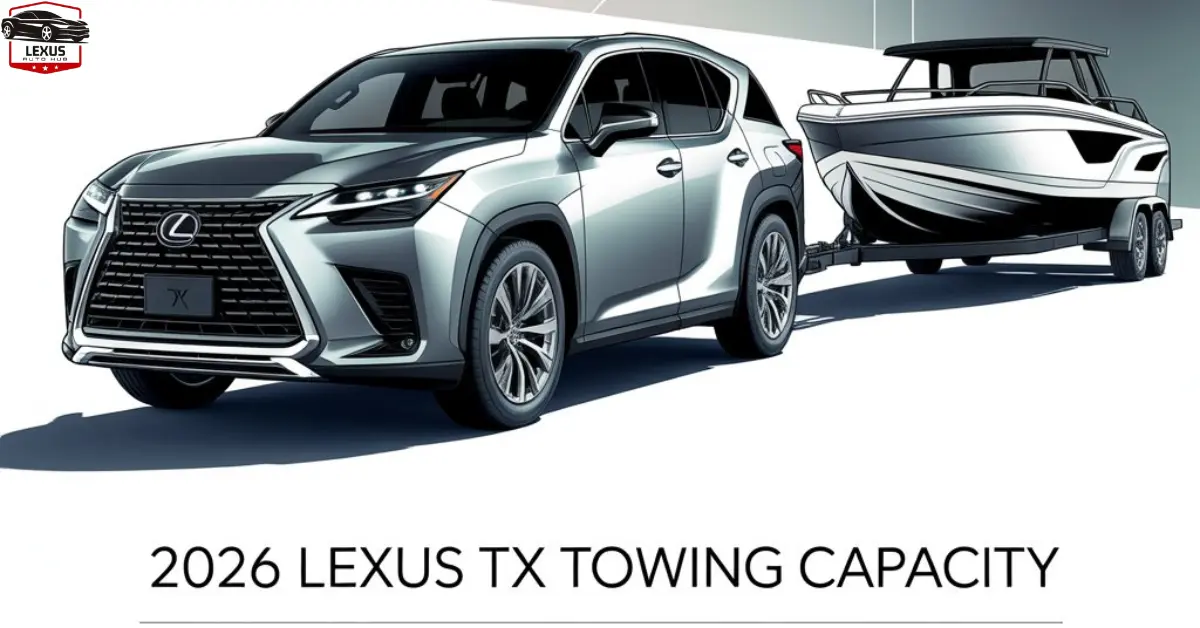
The Lexus TX towing capacity is one of the most important factors to consider when shopping for a three-row luxury crossover SUV. With a maximum towing capacity of 5,000 pounds across all trim levels, the 2026 Lexus TX proves that refined comfort and serious towing capability can coexist in a single vehicle. Whether you are planning to tow a utility trailer, a camper, a small boat, two snowmobiles, two ATVs, or two personal watercraft, the Lexus TX towing capacity is built to handle your lifestyle without compromise.
From the base 2.4L Turbo four-cylinder to the top-tier 3.5L V6 plug-in hybrid, every TX configuration delivers the same impressive tow rating, making it the most capable unibody crossover in the entire luxury SUV lineup. Understanding the Lexus TX towing capacity and how to determine the right setup for your specific needs is the key to getting the most out of this powerful and versatile luxury SUV.
What Is the Lexus TX Towing Capacity in 2026?
When shoppers start comparing luxury three-row crossovers, one question comes up almost immediately: how much can this vehicle actually tow? For anyone considering the 2026 model year lineup, understanding the Lexus TX towing capacity is essential before making any purchasing decision.
The short answer is impressive: every single trim level of the 2026 TX is rated at a maximum towing capacity of 5,000 pounds. That figure holds steady whether you choose the base front-wheel drive configuration, the all-wheel drive variant, the performance-oriented hybrid, or the top-tier plug-in hybrid Luxury trim.
For a vehicle built on a unibody crossover platform — rather than the traditional body-on-frame construction found in heavier off-road SUVs — a 5,000-pound tow rating is a genuinely strong number.
To put that into everyday context, 5,000 pounds is enough to haul a midsize camping trailer, a small-to-medium motorboat with trailer, a pair of personal watercraft on a tandem trailer, a horse trailer for one or two animals, or a cargo trailer loaded with landscaping or renovation materials.
For most active families, the TX towing capacity comfortably handles real-world recreational and utility needs without requiring buyers to step up to a larger, less fuel-efficient body-on-frame SUV.
“Every 2026 TX trim — from the base turbo four-cylinder to the plug-in hybrid V6 — delivers a uniform 5,000-pound maximum towing capacity.”
What makes the Lexus TX towing capacity particularly compelling is that it arrives packaged inside one of the most refined, spacious, and technology-rich three-row crossovers on the market. Buyers are not forced to trade luxury comfort for capability. The TX brings both to the same vehicle, making it a genuinely versatile choice for families who want a premium daily driver that can also pull a trailer on weekends.
Throughout this guide, we will break down exactly how the TX towing capacity is distributed across every trim, explain how to determine the right towing setup for your specific needs, compare the TX against the rest of the luxury SUV lineup, and cover the safety systems and technology that make towing with this vehicle both capable and confidence-inspiring.
Also Read: How to Choose the Best Lexus TX Colors for Your Style 2026
Towing Capacity Across All TX Trim Levels
One of the standout aspects of the 2026 TX lineup is the consistency of its towing capacity across all trim levels. Unlike many competing vehicles where tow ratings vary significantly by configuration, the TX offers the same 5,000-pound maximum regardless of which powertrain or trim you choose.
This simplifies the buying decision considerably — you are choosing between trims based on comfort, technology, and fuel efficiency rather than sacrificing towing ability.
Here is a detailed breakdown of every available 2026 TX configuration and its corresponding specifications:
| Trim / Configuration | Engine | Drive | Towing Capacity | Curb Weight (lb.) | Cargo Vol. (cu. ft.) |
|---|---|---|---|---|---|
| TX 350 | 2.4L Turbo 4-Cyl | FWD | 5,000 lb | 4,420 | 97 |
| TX 350 AWD | 2.4L Turbo 4-Cyl | AWD | 5,000 lb | 4,575 | 97 |
| TX 350 F Sport Handling AWD | 2.4L Turbo 4-Cyl | AWD | 5,000 lb | 4,720 | 97 |
| TX 500h F Sport Performance Premium AWD | 2.4L Turbo 4-Cyl Hybrid | AWD | 5,000 lb | 4,970 | 97 |
| TX 550h+ Luxury AWD | 3.5L V6 Plug-In Hybrid | AWD | 5,000 lb | 4,970 | 97 |
Several key observations stand out from this data. First, the cargo volume remains constant at 97 cubic feet across all trim levels — a genuinely Texas-sized interior that gives the TX one of the most spacious cabins in the entire luxury crossover segment.
Second, while curb weight rises as you move from the base FWD model (4,420 lb.) to the hybrid trims (4,970 lb.), the tow rating does not decrease. This reflects thoughtful engineering that maintains consistent capability even as the platform gains weight from electrification components.
Third, and importantly for fuel-conscious buyers, the hybrid and plug-in hybrid TX trims offer the same 5,000-pound maximum towing capacity as the standard turbo models. Choosing a more fuel-efficient powertrain does not come at the cost of towing ability — a meaningful advantage for buyers who want to save at the pump without limiting their weekend capability.
Key TX Towing Facts at a Glance
- Maximum towing capacity: 5,000 lb. — uniform across all five trim configurations
- Wheelbase: 116.1 inches — the longest in the luxury crossover lineup, improving trailer stability
- Fuel tank: 17.8 gallons on all trims for consistent range while towing
- Cargo volume behind front seats: 97 cu. ft. — one of the largest in the segment
- Available drivetrain options: FWD, AWD, AWD Hybrid, AWD Plug-In Hybrid
- Body construction: unibody crossover platform — lighter and more fuel-efficient than body-on-frame
Also Read: How to Find the Lexus TX seating capacity: A Complete Guide
How to Determine the Right Towing Capacity for You

Knowing that the Lexus TX towing capacity maxes out at 5,000 pounds is only the starting point. The more important question is how to determine whether that number actually meets your real-world towing requirements — and how to match your trailer setup to your vehicle’s capabilities safely and legally.
Know Your Trailer’s Gross Weight
Before calculating whether the TX can handle your specific load, you need to know your trailer’s Gross Vehicle Weight Rating (GVWR), not just its advertised dry weight.
A trailer that weighs 3,200 pounds empty might have a GVWR of 4,800 pounds when fully loaded with gear, water, fuel, and supplies. Always use the maximum loaded weight as your reference number — never the empty weight.
Apply the 80 Percent Rule
Towing safety experts broadly recommend that drivers keep their loaded trailer weight at or below 80 percent of the vehicle’s rated towing capacity. For the TX, that means a practical safe-towing limit of around 4,000 pounds under typical conditions.
Towing at the absolute maximum rating is technically permissible but places maximum stress on the drivetrain, braking system, and cooling components — especially on steep grades or in high temperatures.
Consider Tongue Weight
Tongue weight — the downward force the trailer exerts on the vehicle’s hitch — should typically fall between 10 and 15 percent of the trailer’s total loaded weight. For a 4,000-pound trailer, that means 400 to 600 pounds of tongue weight. Exceeding this range causes instability: too little tongue weight makes the trailer sway, while too much overloads the rear suspension and reduces front-wheel traction and steering control.
Account for Passengers and Cargo in the Vehicle
Every passenger and pound of cargo you carry in the TX reduces the vehicle’s available payload capacity. When calculating your total towing setup, remember to subtract the weight of all occupants and in-vehicle cargo from your available capacity. A fully loaded three-row TX with seven passengers and luggage carries meaningful additional weight that affects both handling and braking performance.
Match Your Hitch and Wiring
A proper hitch installation rated to match or exceed 5,000 pounds is essential. In addition, most modern trailers require a four-pin or seven-pin wiring harness for brake lights, turn signals, and running lights. If you plan to tow a trailer with integrated electric brakes — common on trailers above 3,500 pounds — a dedicated brake controller is also necessary.
Important: Always consult the official owner’s manual and towing guide for your specific TX trim and model year before towing. Towing capacities may be affected by optional equipment, elevation, climate, and vehicle load. Never exceed the manufacturer’s stated maximum towing capacity under any circumstances.
Also Read: Find Your Perfect Lexus TX Hybrid for sale: A Step by Step Guide
Understanding the Towing Package
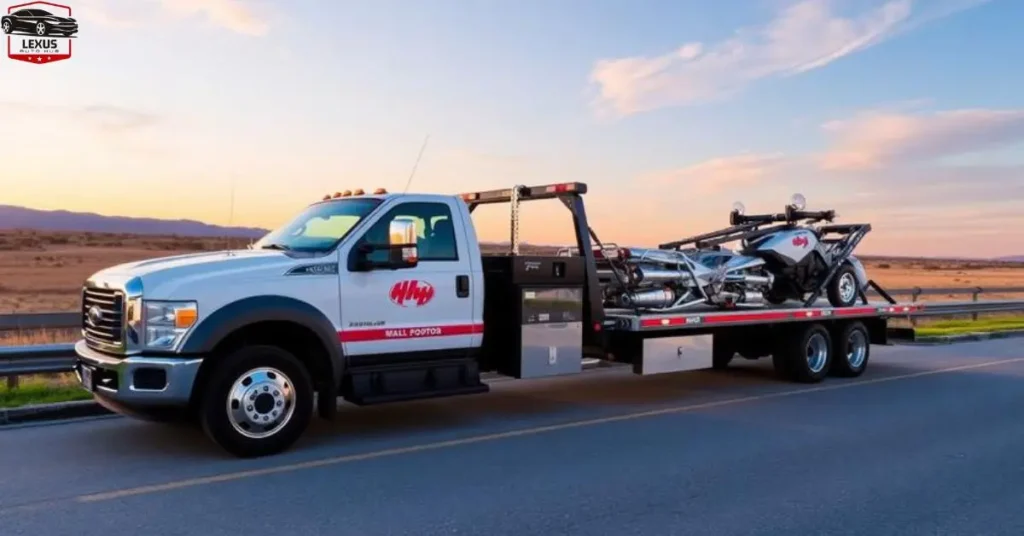
One of the most practical aspects of the 2026 TX lineup is the availability of a dedicated towing package across all trim levels. Priced at an accessible $160, the towing package delivers a set of hardware upgrades specifically designed to support regular towing use and protect the vehicle’s mechanical components under sustained load.
The package includes a heavy-duty radiator and cooling fan along with engine and transmission oil coolers. These additions directly address one of the primary mechanical stresses of towing: heat buildup.
When a vehicle pulls a loaded trailer — especially on inclines or at highway speeds — the engine, transmission, and cooling system work significantly harder than under normal driving conditions. Elevated thermal loads over time can degrade transmission fluid, stress engine components, and reduce the lifespan of cooling system parts.
By upgrading the radiator, adding a heavy-duty cooling fan, and installing dedicated oil coolers for both the engine and transmission, the towing package helps maintain optimal operating temperatures during extended towing sessions.
For buyers who plan to tow regularly — not just occasionally — adding this package is a straightforward, cost-effective decision that protects the vehicle’s long-term mechanical health.
At just $160, the towing package represents exceptional value. Comparable aftermarket cooling upgrades on other vehicles can cost considerably more and may require professional installation. The factory-integrated solution available for the TX is engineered specifically for the vehicle’s thermal management system, ensuring compatibility and reliability.
If you plan to tow even occasionally — taking a boat to the lake a few times each summer or hauling a utility trailer for home projects — the towing package is a sensible addition that costs very little relative to the peace of mind and mechanical protection it provides.
How the TX Compares to the Full SUV Lineup
Understanding the TX towing capacity in isolation is useful, but comparing it against the complete luxury SUV lineup provides critical context for buyers who are still deciding between models. The full 2026 lineup spans from compact crossovers to full-size body-on-frame SUVs, and towing capacity varies dramatically across that range.
| Model | Body Type | Max Towing Capacity | Max Engine | Seating Rows |
|---|---|---|---|---|
| NX (All Trims) | Compact Crossover | 2,000 lb | 2.5L 4-Cyl Hybrid | 2 |
| RX (All Trims) | Midsize Crossover | 3,500 lb | 2.4L Turbo / Hybrid | 2 |
| TX (All Trims) ★ | Large Crossover | 5,000 lb | 3.5L V6 PHEV | 3 |
| GX 550 Overtrail | Body-on-Frame SUV | 9,096 lb | 3.4L Twin-Turbo V6 | 3 |
| GX 550 Premium | Body-on-Frame SUV | 9,063 lb | 3.4L Twin-Turbo V6 | 3 |
| LX 600 / LX 700h | Body-on-Frame SUV | 8,000 lb | 3.5L Twin-Turbo V6 | 2 or 3 |
| UX (All Trims) | Subcompact Crossover | Not rated for towing | 2.0L 4-Cyl | 2 |
This comparison reveals the TX’s precise position in the lineup: it sits in the middle tier of towing capability, well above the compact NX (2,000 lb.) and midsize RX (3,500 lb.), but below the body-on-frame GX and LX models which can pull between 8,000 and 9,096 pounds. The UX, at the other end of the spectrum, is not rated for towing at all.
The TX’s 5,000-pound rating is the highest available among the crossover-platform models in the lineup. It achieves this while also offering three-row seating, a 97 cubic foot cargo volume, and the option for hybrid or plug-in hybrid powertrains — a combination no other model in the lineup can match.
For buyers whose towing needs fall below 5,000 pounds and who prefer a crossover’s on-road ride quality and fuel efficiency over the off-road credentials of a body-on-frame platform, the TX represents the ceiling of available towing capability. It is the natural choice for those who need more pulling power than the NX or RX can offer but do not require the extreme capacity of the GX or LX.
“Among all unibody crossover models in the 2026 luxury SUV lineup, the TX stands alone in delivering a 5,000-pound tow rating with three-row seating.”
Also Read: How to Drive Lexus TX 350 Hybrid for Maximum Efficiency 2026
On-Road vs Off-Road: What the TX Is Built For
A critical distinction for buyers comparing the TX against larger body-on-frame models is the difference in platform architecture and what it means for real-world use. The TX is built on a unibody crossover platform, not the body-on-frame construction used in the GX and LX. This is a deliberate engineering choice, and it shapes the TX’s character and capability in meaningful ways.
Body-on-frame construction — where a separate steel frame is mounted beneath the vehicle’s body — delivers superior structural rigidity for heavy-duty off-road use, better capability on rough terrain, and the higher towing capacities seen in the GX and LX. However, these vehicles are heavier, less fuel-efficient, and ride with a distinctly truck-like character on paved roads.
The TX’s unibody construction integrates the body and frame into a single structure. This approach reduces overall weight, lowers the vehicle’s center of gravity, and allows for a smoother, more car-like ride quality on paved roads. The result is a vehicle that is genuinely more comfortable for daily use, more fuel-efficient, and — in the hybrid and plug-in hybrid variants — significantly more economical at the pump.
The TX is designed and optimized for road use, not off-road adventure. Buyers seeking a vehicle capable of serious off-road towing, rocky trail navigation, or overlanding applications should look toward the GX Overtrail or LX instead. But for the vast majority of three-row luxury crossover buyers — those who want a refined daily driver with the ability to pull a boat, camper, or cargo trailer on weekends — the TX is precisely what they need.
The 116.1-inch wheelbase of the TX is notably longer than the RX’s 112.2-inch platform and contributes to improved trailer stability at highway speeds. A longer wheelbase reduces the pendulum effect that can cause trailer sway, making the TX feel more planted and composed when pulling a loaded trailer down the freeway.
Also Read: A Guide to Upgrading Your TX 350 Lexus Features
Hybrid and Plug-In Hybrid Towing Explained
One of the most frequently asked questions about the TX lineup involves whether the hybrid and plug-in hybrid models can tow as effectively as the standard turbocharged versions. The answer, based on the manufacturer’s specifications, is a clear yes — all five TX configurations share the same 5,000-pound maximum towing capacity regardless of powertrain.
TX 500h F Sport Performance Premium AWD
This turbocharged hybrid variant pairs a 2.4-liter turbo four-cylinder engine with an electric motor system and all-wheel drive. The combined output makes this one of the most performance-oriented models in the TX lineup, offering strong acceleration in addition to its full 5,000-pound tow rating. The hybrid system’s electric torque delivery is particularly useful for trailer towing — electric motors produce maximum torque from a standstill, which helps when pulling a loaded trailer from a stop or climbing a grade.
TX 550h+ Luxury AWD
The top-tier TX uses a 3.5-liter V6 plug-in hybrid system — the most sophisticated powertrain in the TX range. Despite carrying the additional weight of a larger battery pack (both the hybrid and PHEV trims weigh 4,970 pounds, compared to 4,420 for the base FWD model), this trim still achieves the full 5,000-pound tow rating. The plug-in hybrid capability means buyers can complete shorter commutes on electric power alone while retaining full towing capability for weekend trips.
It is worth noting that towing with any hybrid or plug-in hybrid vehicle will reduce electric driving range more significantly than standard highway driving due to the increased power demand. Buyers who choose a PHEV TX for its electric efficiency benefits should expect those benefits to diminish when towing at or near maximum capacity.
Hybrid Towing Tips for the TX
- Use AWD mode for maximum traction and stability when towing heavy loads
- Allow the hybrid battery to charge fully before a long towing trip for the most efficient operation
- Expect reduced electric-only range when towing — the combustion engine will engage more frequently
- Electric torque delivery aids trailer pulling from a standstill and on grades
- Monitor battery temperature indicators during extended towing in high ambient temperatures
- Plan fuel stops more conservatively when towing — fuel consumption increases significantly under load
Safety Technology That Supports Towing
Modern luxury crossovers bring a suite of electronic safety and driver-assistance systems that meaningfully improve the towing experience. For buyers evaluating the TX towing capacity and wondering how that capability is supported by the vehicle’s technology, the answer is encouraging.
The broader luxury SUV lineup demonstrates what is possible with integrated towing safety technology. The top-tier body-on-frame LX models, for example, include a standard trailer sway control (TSC) system — an electronic system that detects and actively suppresses unwanted trailer movement caused by wind gusts, uneven road surfaces, and driver steering inputs.
This type of system monitors vehicle dynamics in real time and applies selective braking or reduces engine output to bring an oscillating trailer back under control before the sway becomes dangerous.
The TX benefits from the advanced technology integration common across the luxury SUV lineup. Standard active safety systems including automatic emergency braking, lane departure warning, lane tracing assist, and adaptive cruise control all contribute to a safer towing experience by reducing driver fatigue and improving situational awareness during long highway drives with a trailer in tow.
The all-wheel drive system available across most TX trims is particularly valuable for towing. AWD provides better traction when pulling a loaded trailer from a stop, maintains more stable vehicle dynamics in crosswinds, and reduces wheel spin on wet or slippery surfaces that could destabilize a towing setup. Buyers who plan to tow regularly are well-advised to choose an AWD TX configuration over the base front-wheel drive variant.
The vehicle’s advanced connectivity and driver information systems also support towing by providing real-time feedback on vehicle load, temperature readings, and fuel economy — information that helps drivers make informed decisions about speed, grade, and rest stops during a towing journey.
Buyer’s Guide: Choosing the Right TX Trim for Towing
Since all five TX configurations share the same 5,000-pound maximum towing capacity, the trim selection decision revolves around secondary factors: how often you tow, what kind of towing you do, how important fuel efficiency is, and what driving dynamics you prefer. Here is a practical breakdown to help guide that decision.
For Occasional Towing and Value
The TX 350 AWD represents the most accessible entry point for buyers who want all-wheel drive capability alongside the full tow rating. At 4,575 pounds of curb weight, it is the lightest AWD configuration in the lineup, which benefits both fuel efficiency and on-road agility.
If you tow a boat or cargo trailer a handful of times per year, this trim offers everything you need without the added cost of the performance or luxury variants. Add the $160 towing package and you have a complete, capable towing setup.
For Sporty Daily Driving with Towing Capability
The TX 350 F Sport Handling AWD adds sport-tuned suspension and styling upgrades for buyers who want a more dynamic driving character alongside the 5,000-pound tow rating.
This is a natural fit for buyers who spend most of their driving time on paved roads but want a capable towing machine for weekend activities. The sport suspension tuning delivers sharper handling responses without compromising the vehicle’s inherent towing stability.
For Maximum Performance and Regular Towing
The TX 500h F Sport Performance Premium AWD combines hybrid powertrain efficiency with sport-focused performance hardware and the complete 5,000-pound tow rating.
The electric motor’s torque delivery makes towing feel effortlessly strong, particularly during acceleration and grade climbing. This is an excellent choice for buyers who tow regularly and value the combination of performance and improved fuel economy relative to non-hybrid alternatives.
For Maximum Luxury and Environmental Efficiency
The TX 550h+ Luxury AWD is the pinnacle of the TX lineup. Its plug-in hybrid V6 powertrain offers the most sophisticated level of electrification available in the TX range, with the ability to drive on electric power alone for shorter journeys.
Despite the added complexity and weight of the PHEV system, the full 5,000-pound tow rating is maintained. This is the right choice for buyers who prioritize premium comfort and advanced technology alongside complete towing capability.
Final Thoughts
The 2026 TX delivers a consistent, impressive 5,000-pound maximum towing capacity across every trim in its lineup — making it the most capable unibody crossover in the entire luxury SUV range. Whether you choose the base turbocharged model, the sport-tuned F Sport Handling variant, the performance-focused hybrid, or the top-tier plug-in hybrid Luxury trim, the towing capability remains unchanged.
What sets the TX apart is the combination of that towing ability with a genuinely premium interior, a Texas-sized 97 cubic foot cargo volume, three-row seating for up to eight, and the option for hybrid efficiency at every price point. For families and active buyers who refuse to compromise between daily luxury and weekend capability, the TX represents a compelling and well-rounded answer.
Pair any TX trim with the $160 towing package for enhanced thermal protection, choose AWD for maximum towing confidence, and you have a luxury crossover that handles both the school run and the lake trip with equal composure.
FAQs:
Can a Lexus TX tow a boat?
You will have no problem towing a utility trailer, a camper, a small boat, two snowmobiles, two ATVs, or two personal watercraft around Manhasset. See the engine specs here: 2.4L Twin-Turbo inline four-cylinder. Eight-speed, six-speed, or electronically controlled CVT.
Is there a 6000 lb Lexus?
Since the Lexus GX, TX and LX have Gross Vehicle Weight Ratings (GVWR) greater than 6,000 pounds, they can be fully depreciated in the first year of ownership when used for business 100% of the time, giving you the freedom to spend on the things that matter most.
Is Lexus TX bigger than Volvo XC90?
Lexus TX Dimensions. The 2026 Volvo XC90 is 69.9 inches tall, 79.1 inches wide, and 195 inches long. The 2026 Lexus TX is 70.1 inches tall, 78.3 inches wide, and 203.1 inches long; since it’s about 8 inches longer than the Volvo XC90, the Lexus model can be more difficult to park.
Is Lexus TX longer than Grand Highlander?
The Lexus TX measures 203.1 inches long, while the Grand Highlander shrinks in comparison with only 201.4 inches of length. The two three-row SUVs are identical in width, measuring 78.3 inches wide.
Is the Lexus TX bigger than the Kia Telluride?
The Telluride has 2.4 inches more front hip room, 1.6 inches more front shoulder room, .1 inches more rear headroom, 2.9 inches more rear legroom, 1.2 inches more rear hip room, 2.2 inches more rear shoulder room and .9 inches more third row headroom than the TX.

I’m Fiza Ansari, a Lexus specialist with 2+ years of experience helping drivers find their perfect luxury vehicle. From the sporty RC F to the elegant ES sedan and family-friendly RX—I know each model thoroughly. My expertise covers performance features, ownership costs, leasing options, and certified pre-owned benefits. Whether you’re a first-time luxury buyer or upgrading to an F Sport model, I provide honest guidance to help you make the right choice for your lifestyle and budget.